AI Business Automation: Connect AI to Your Real Data for Smarter Operations
Are you still copy-pasting data from one spreadsheet to another? Running the same reports week after week? Watching your competitors move faster while you juggle tools that don’t talk to each other? You’re not alone. The promise of AI has been loud, but for most business owners, it’s been a black box of generic answers.
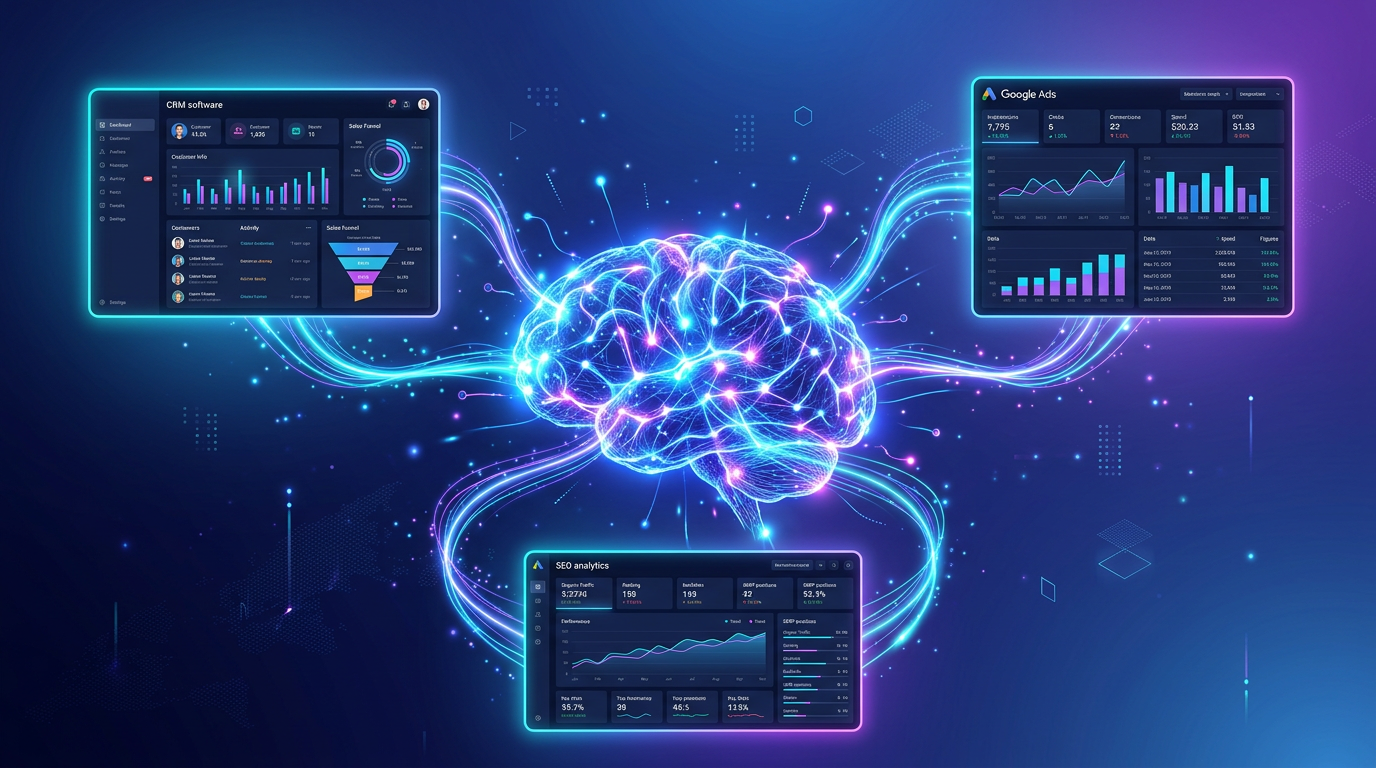
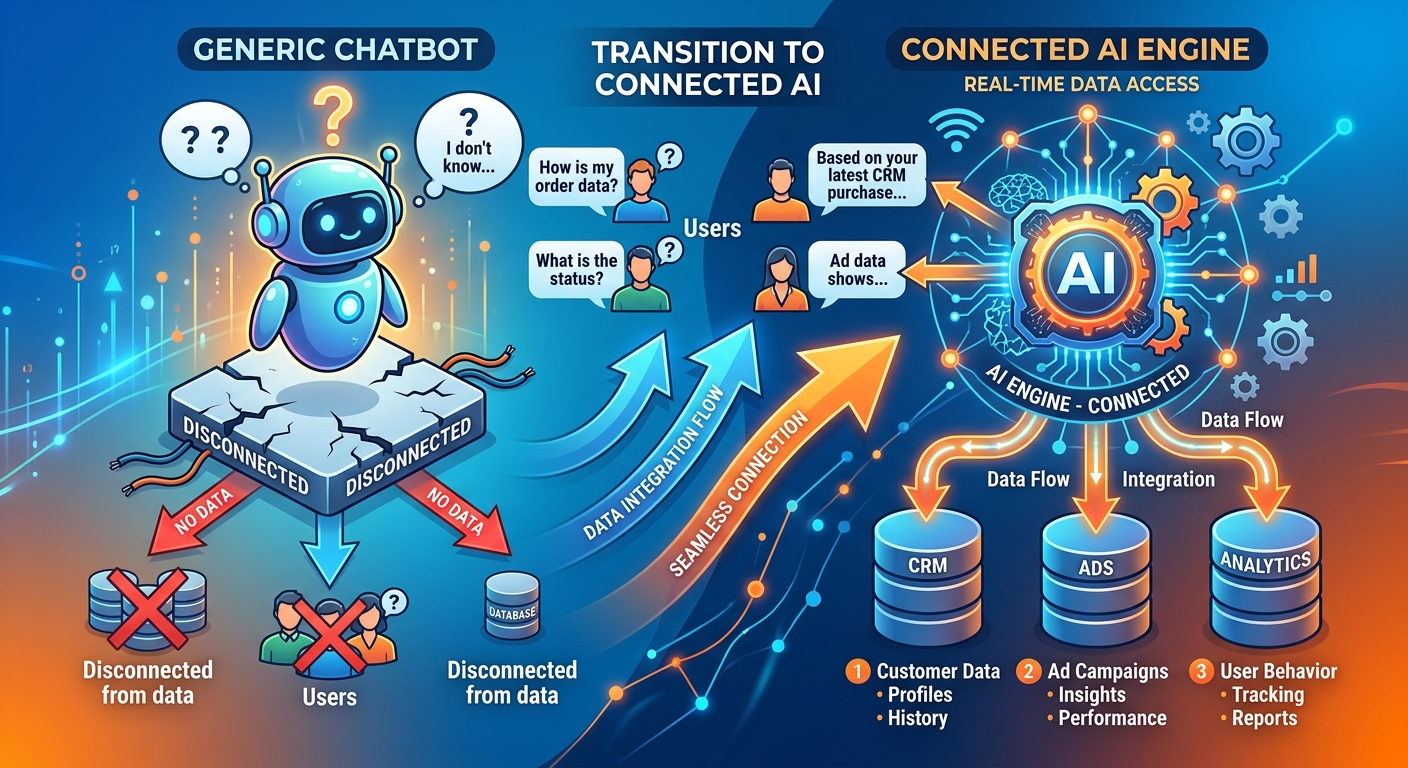
AI business automation changes that. Instead of a chatbot that guesses, you get an engine connected to your actual CRM, your ad accounts, your sales pipeline. It doesn’t just answer questions—it takes action. This article shows you exactly how to move from manual chaos to connected, automated operations that scale without hiring five more people.
The Shift from Generic Chatbots to Connected AI
For years, AI meant typing a question into ChatGPT and hoping the answer made sense. But that era is ending. Major AI providers like Anthropic are launching dedicated small business offerings (Claude for Small Business), signaling a strategic shift from enterprise-first to SMB-focused solutions. Why? Because small businesses need more than conversation—they need execution.
Why General-Purpose AI Falls Short
- No access to your data – It can’t see your customer records, invoice history, or ad performance.
- No actions – It gives advice, but you still have to do the work.
- No consistency – Every session starts from scratch.
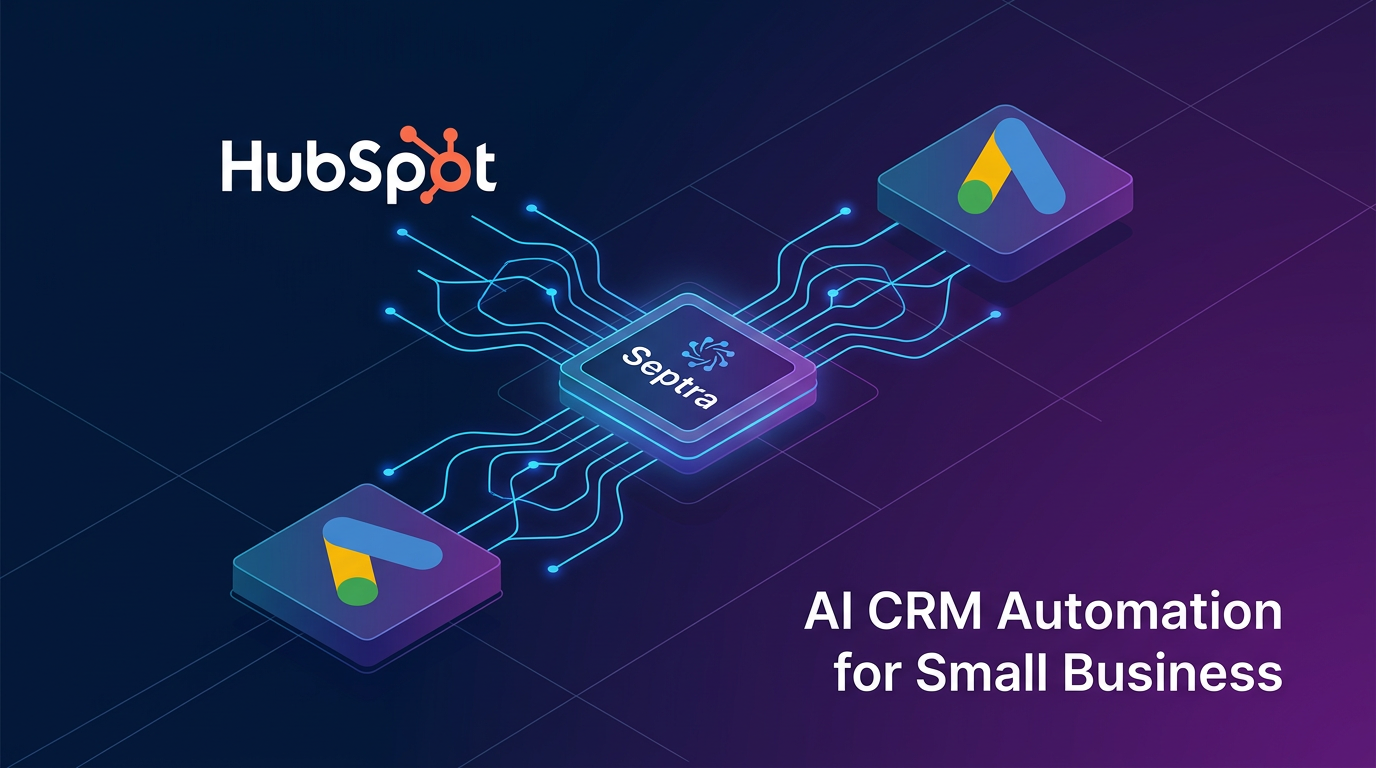
Connected AI, on the other hand, plugs directly into your HubSpot, Odoo, Google Ads, and analytics. It knows your customers, your campaigns, and your goals. It can update a contact, pause a low-performing ad, or generate a report—without you touching a keyboard.
Why Your CRM Needs AI, Not Just Automation
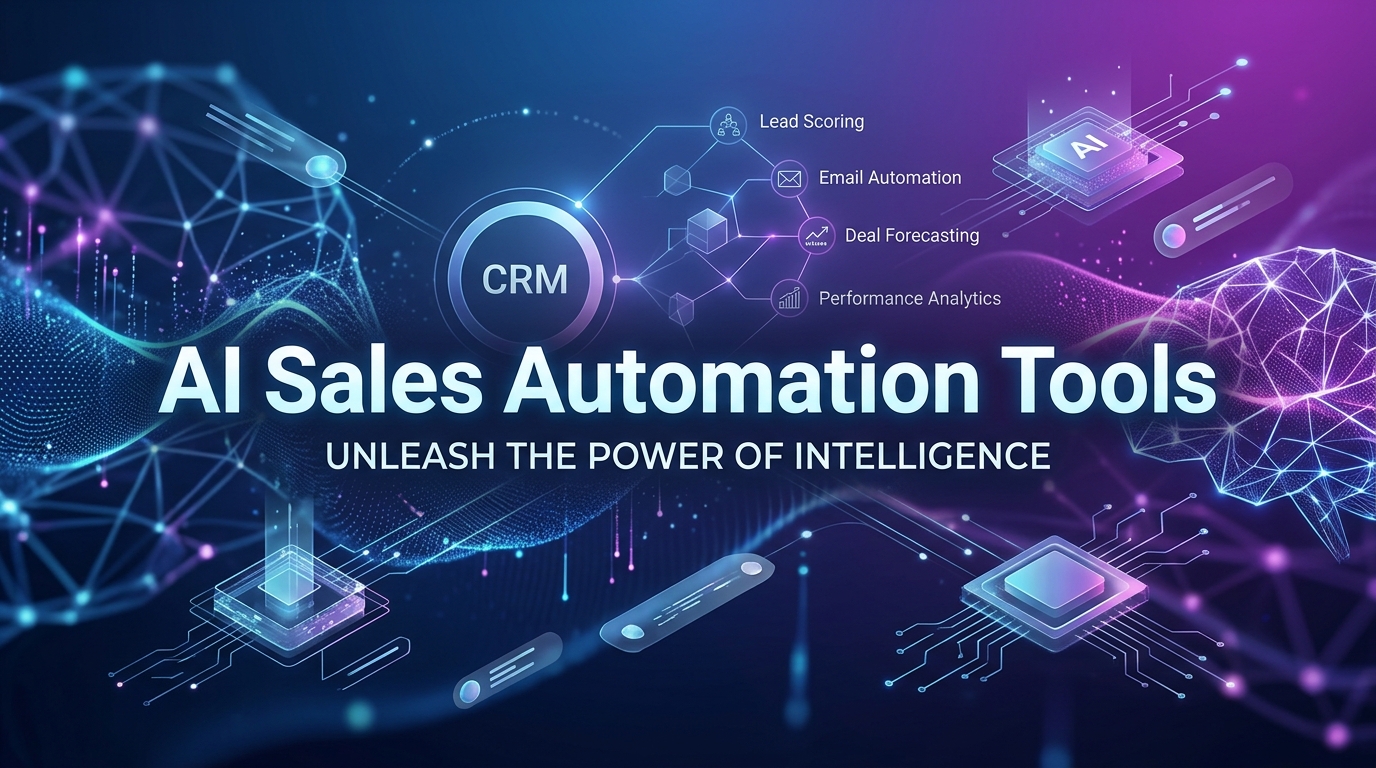
Most CRMs offer basic automation: send an email when a deal moves stage, create a task when a form is submitted. That’s helpful, but it’s not intelligent. AI business automation takes CRM to the next level by adding context and prediction.
HubSpot + AI: More Than Workflows
Imagine a lead visits your pricing page three times, then calls your competitor. A smart AI can flag that lead as high-risk, update the deal stage, and draft a personalized follow-up email—all based on real behavior data. No manual scoring, no missed opportunities.
Odoo + AI: Unified Operations
Odoo users often struggle with data silos between sales, inventory, and accounting. AI that sits on top of Odoo can reconcile orders with stock levels, predict reorder points, and even suggest upsells based on purchase history. The result? Fewer spreadsheets, faster decisions.
Multi-Step Task Automation: The New Standard
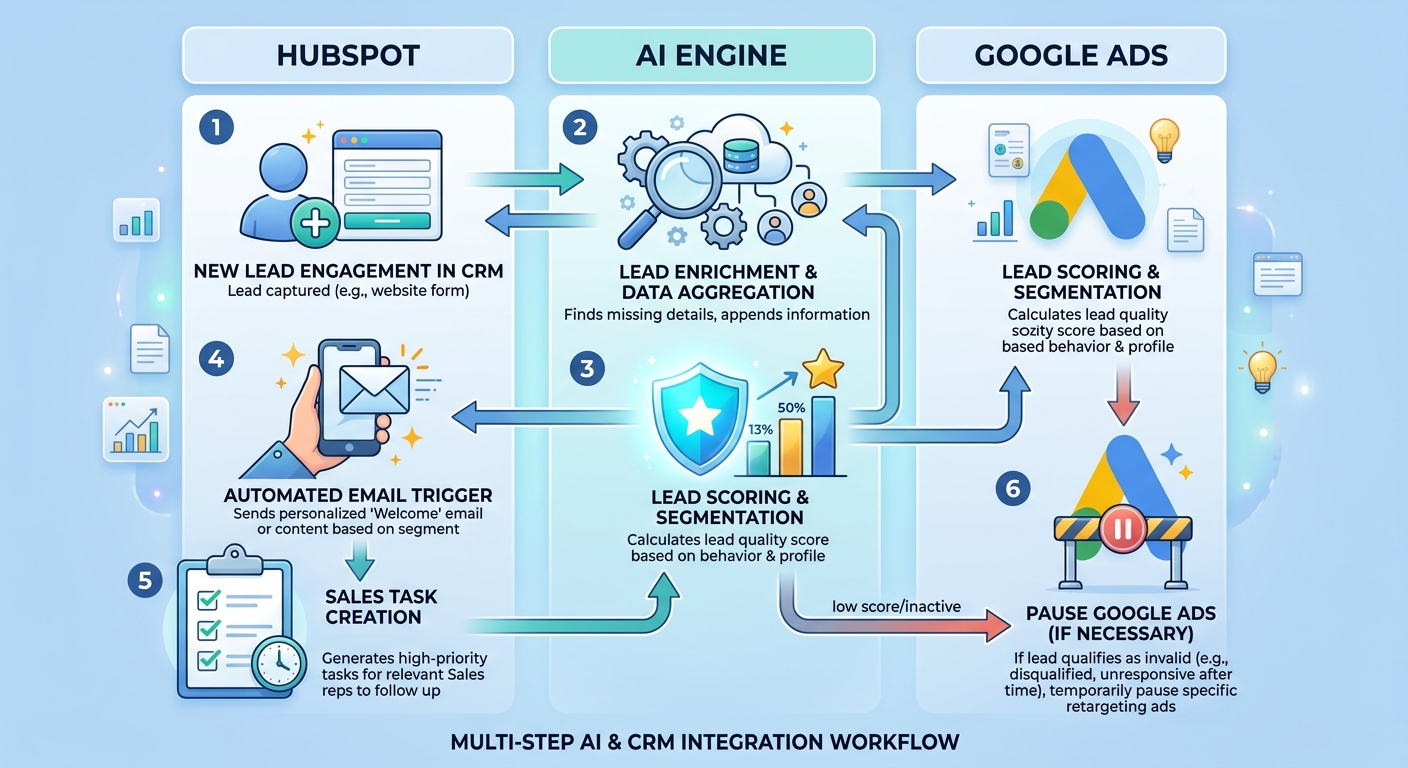
Chatbots that answer one question and stop are yesterday’s news. According to recent industry trends, AI tools are evolving into systems that execute complex, multi-step workflows across multiple applications—with scheduled automation capabilities.
What Does a Multi-Step Workflow Look Like?
| Step | Action | Tool |
|---|---|---|
| 1 | New lead enters CRM | HubSpot form |
| 2 | AI enriches lead with company data | Clearbit / LinkedIn |
| 3 | Lead scored and routed to correct rep | AI decision engine |
| 4 | Personalized email sequence triggered | Mailchimp / HubSpot |
| 5 | Rep gets task: call within 1 hour | CRM task + Slack alert |
| 6 | Sequence paused if lead responds | Automated condition |
This isn’t futuristic. It’s available today. The key is connecting AI to the actual pipelines your team already uses.
Domain-Specific AI Models for Marketing
General-purpose models like GPT-4 are impressive, but they aren’t specialized. Companies are now developing vertical AI engines trained on specific business functions—like SocialPost.ai for social media or Septra’s own engine for ads and SEO. This maturation toward domain-specific models means better accuracy and less hallucination.
Google Ads Optimization with AI
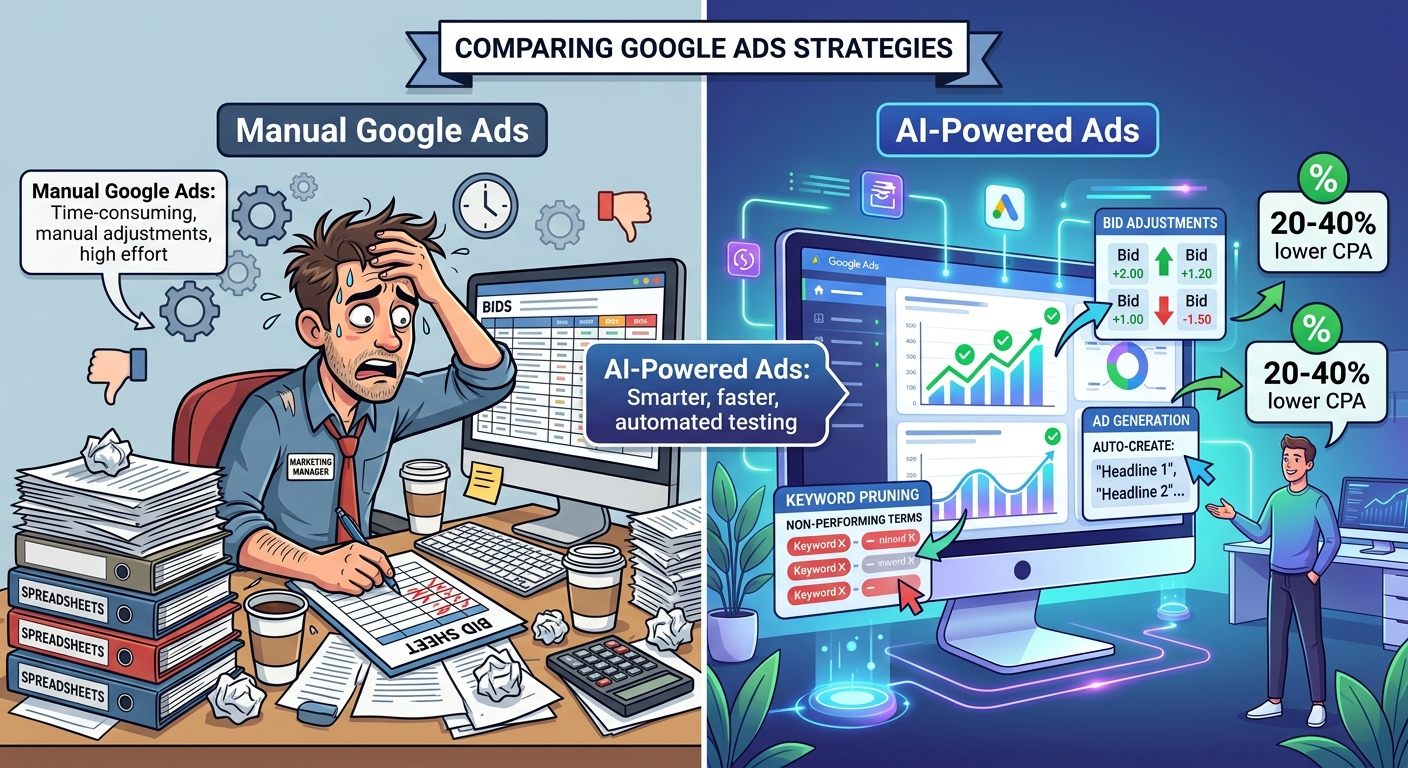
Managing Google Ads manually means hours of bid adjustments, keyword pruning, and A/B testing. AI connected to your ad account can:
- Automatically pause underperforming keywords based on CPA thresholds.
- Adjust bids in real time for high-intent audiences.
- Generate ad copy variants that match your brand voice.
- Analyze search term reports and add negative keywords instantly.
The result? A 20–40% reduction in cost per lead, according to early adopters. And you don’t need a full-time PPC manager.
SEO Automation: Stop Doing the Busy Work
SEO requires consistent content updates, keyword tracking, and technical audits. AI automates the grunt work:
- Content briefs generated from top-ranking pages.
- Keyword gap analysis against competitors.
- Automated internal linking suggestions.
- Performance monitoring with alerts for ranking drops.
When AI handles these tasks, your team can focus on strategy and creativity.
Bridging the Brand vs. AI Search Gap
Recent CMO surveys show that brand building is the #1 priority, while AI search optimization sits at #17. That’s a dangerous disconnect. As AI-driven search (like Google’s SGE and ChatGPT) reshapes how users find information, businesses that ignore it will lose visibility.
How to Bridge the Gap
- Create content that AI models love – Structured data, clear answers, authoritative sources.
- Optimize for conversational queries – “How does AI business automation work?” rather than just “AI automation.”
- Use AI to distribute brand content – Let automation repurpose blogs into social posts, emails, and video scripts.
The businesses that treat brand and AI search as allies—not competitors—will capture both direct traffic and AI-generated citations.
Overcoming AI Integration Anxiety
The IT services market is experiencing volatility precisely because of AI automation concerns. Many decision-makers worry: “Will AI replace my team?” or “Is it secure to connect AI to my systems?”
The Reality
AI doesn’t replace people; it removes the tedium. When you reduce manual overhead, your team does more valuable work—closing deals, building relationships, improving strategy. And security? Modern AI automation platforms (like Septra) use encrypted API connections, data isolation, and role-based access. Your data stays yours.
A Practical Starting Point
- Identify one repetitive task – e.g., weekly reporting for Google Ads.
- Map the data flow – where does the data live? (CRM, ad platform, spreadsheets)
- Connect AI to those sources – use a platform that supports native integrations.
- Set a trigger and action – “Every Monday at 9 AM, generate a performance report and email it to the team.”
- Review results – adjust, expand to more workflows.
This incremental approach builds confidence and immediate ROI.
Frequently Asked Questions
What is AI business automation?
AI business automation refers to using artificial intelligence connected to your business systems (CRM, ads, analytics) to execute tasks, generate insights, and optimize workflows without manual effort. Unlike generic chatbots, it accesses real data and takes action.
How does AI integrate with HubSpot or Odoo?
Through APIs and pre-built connectors, AI platforms can read, write, and update records in real time. For example, an AI can automatically enrich a new HubSpot contact with company data or update an Odoo inventory level based on sales orders.
Can AI really optimize Google Ads without human oversight?
Yes, when properly configured. AI can adjust bids, pause keywords, test ad copy, and analyze performance—all within rules you set. Most businesses start with hybrid oversight and gradually automate more as trust builds.
How do I start with AI automation for my business?
Start small. Pick one high-friction task—like weekly ad reporting or lead enrichment—and connect AI to the relevant tool. Septra.ai makes this simple with one-click integrations for HubSpot, Odoo, Google Ads, and more. No coding required.
Conclusion: Stop Wasting Time, Start Scaling
The question isn’t whether AI can help your business—it’s whether you can afford to keep working manually. AI business automation is no longer a luxury reserved for enterprises with dedicated data scientists. It’s available, affordable, and proven for SMBs that want to grow without adding headcount.
You don’t need to understand neural networks or write Python. You just need a platform that connects AI to your real data and lets you control the workflows. Septra.ai was built exactly for this: to give you back hours every week and turn your data into automated actions that drive sales.
Ready to automate your toughest workflows? Start your free trial at septra.ai and see what happens when AI actually knows your business.
Ready to build your own AI app?