AI Sales Automation Tools: Your Blueprint to Scale Revenue Without Hiring
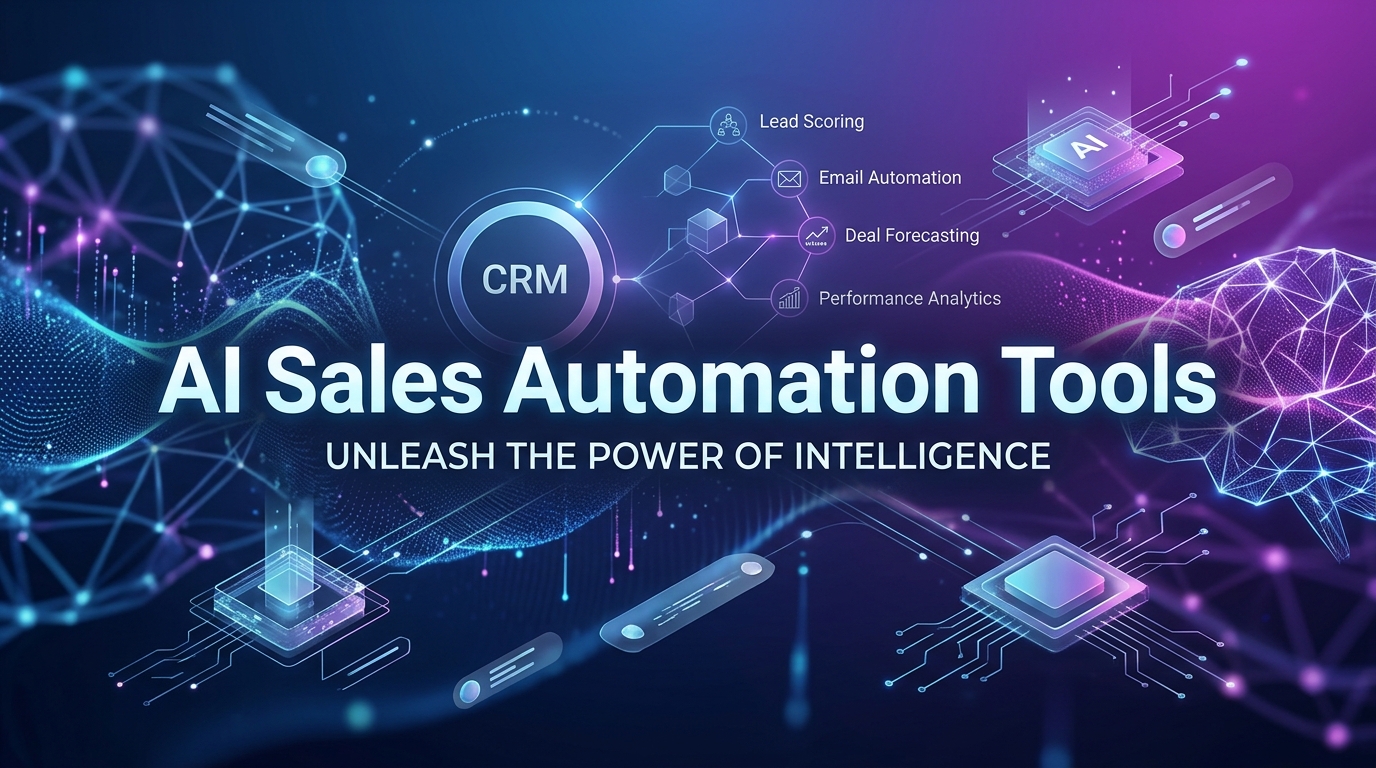
If you’re a business owner still running manual lead follow-ups, juggling spreadsheets, and losing deals to slow response times, you’re leaving money on the table every single day. The era of generic ChatGPT advice is over. What you need now are AI sales automation tools that plug directly into your real data — your CRM, your ads platform, your email sequences — and execute multi-step workflows that used to require a whole sales team.
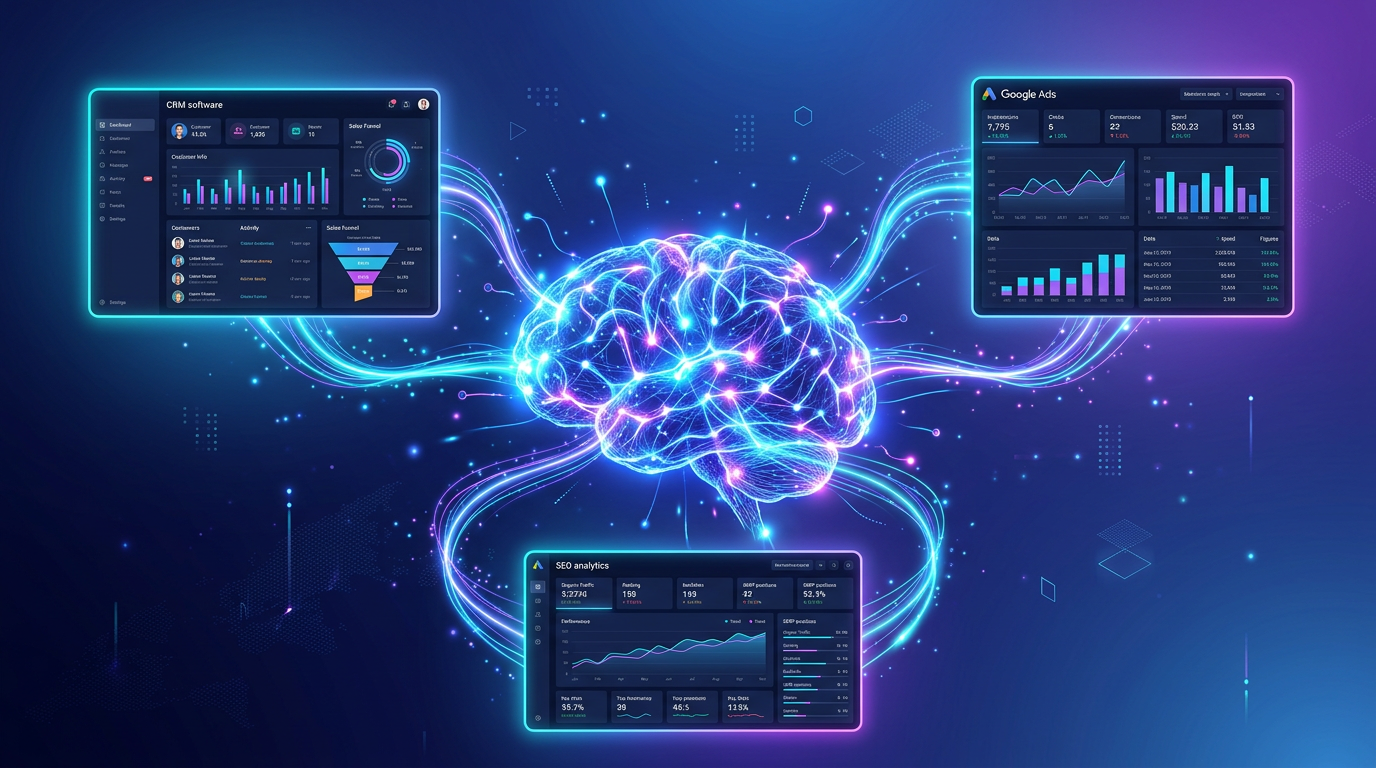
Modern AI doesn’t just write emails; it qualifies leads, scores intent, schedules meetings, and even triggers HubSpot or Odoo automations based on prospect behavior. This isn’t science fiction — it’s available today, and small-to-medium businesses (SMBs) are using it to close more deals without adding a single salesperson. In this guide, you’ll learn exactly how to deploy these tools, what to look for in a platform, and how Septra AI turns your CRM into a revenue engine.
Why AI Sales Automation Tools Are No Longer Optional for SMBs
The old playbook said you need a full inside sales team: lead gen, SDRs, account executives, CRM managers. But margins are tight, hiring is expensive, and customer expectations have shifted. Buyers expect an immediate response, personalized outreach, and seamless handoffs between channels.
Enterprise companies have been automating sales workflows for years. Now, major AI providers — including Anthropic with its newly launched Claude for Small Business — are bringing enterprise-grade automation downstream to SMBs. The message is clear: AI sales automation tools are no longer a luxury; they are the minimum viable sales stack for any company that wants to compete.
What Makes a Tool AI-Powered vs. Just Automated?
- Rule-based automation follows if-then logic (e.g., “if lead fills form, send email”).
- AI-powered automation uses machine learning, natural language processing (NLP), and predictive scoring to decide when to reach out, who to prioritize, and what to say — optimized from past successful conversions.
Septra’s AI agents, for instance, learn from your CRM’s history with HubSpot or Odoo to replicate top-performer behavior across every inbound lead.
How AI Sales Automation Tools Transform Each Stage of the Funnel
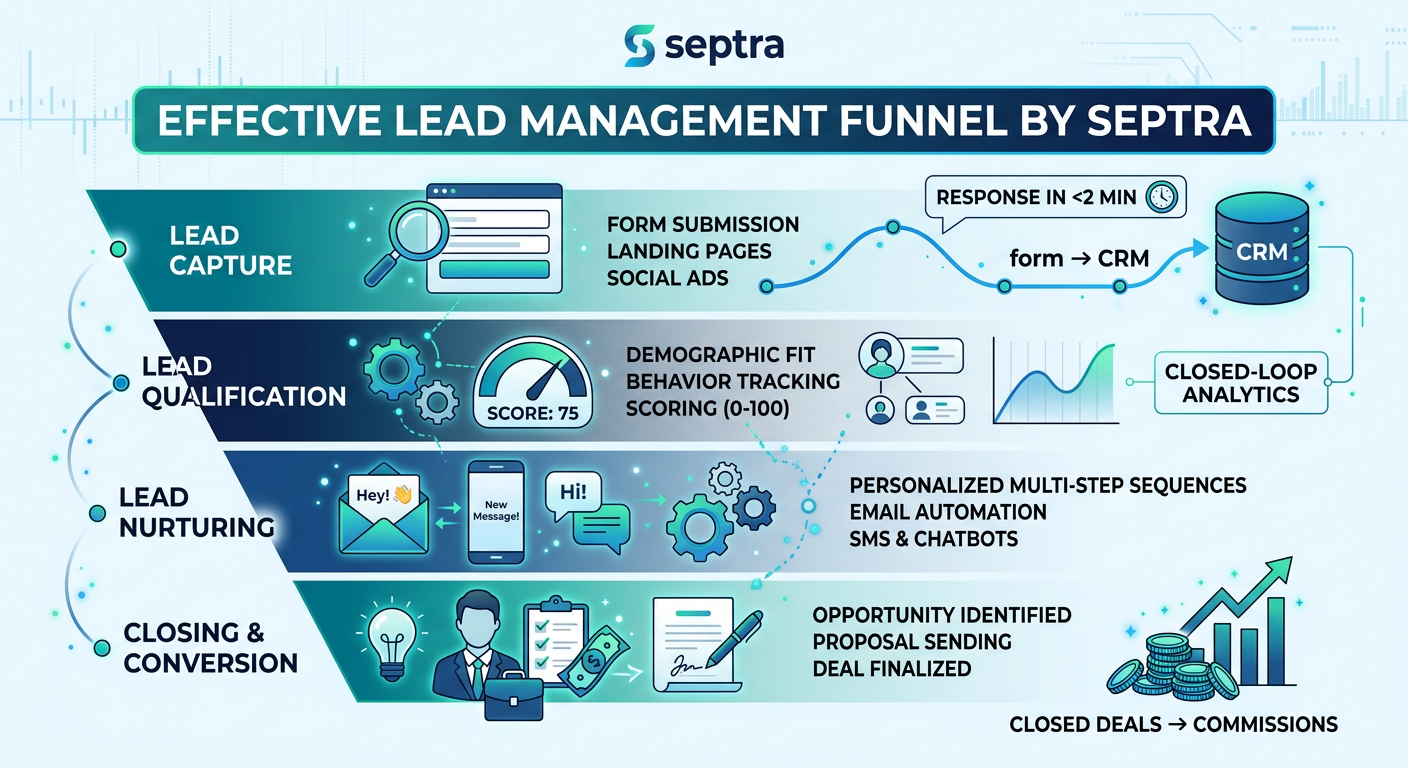
To get the most out of AI, you need to understand exactly where it adds the most leverage. Let’s break down lead capture, qualification, nurturing, and closing — and map each to specific automation capabilities.
Lead Capture: From Form Fill to CRM Entry in Seconds
When a prospect downloads a whitepaper or books a demo, every second of delay kills conversion. Studies show that responding within 5 minutes increases qualification odds by 9x. AI sales automation tools eliminate lag by:
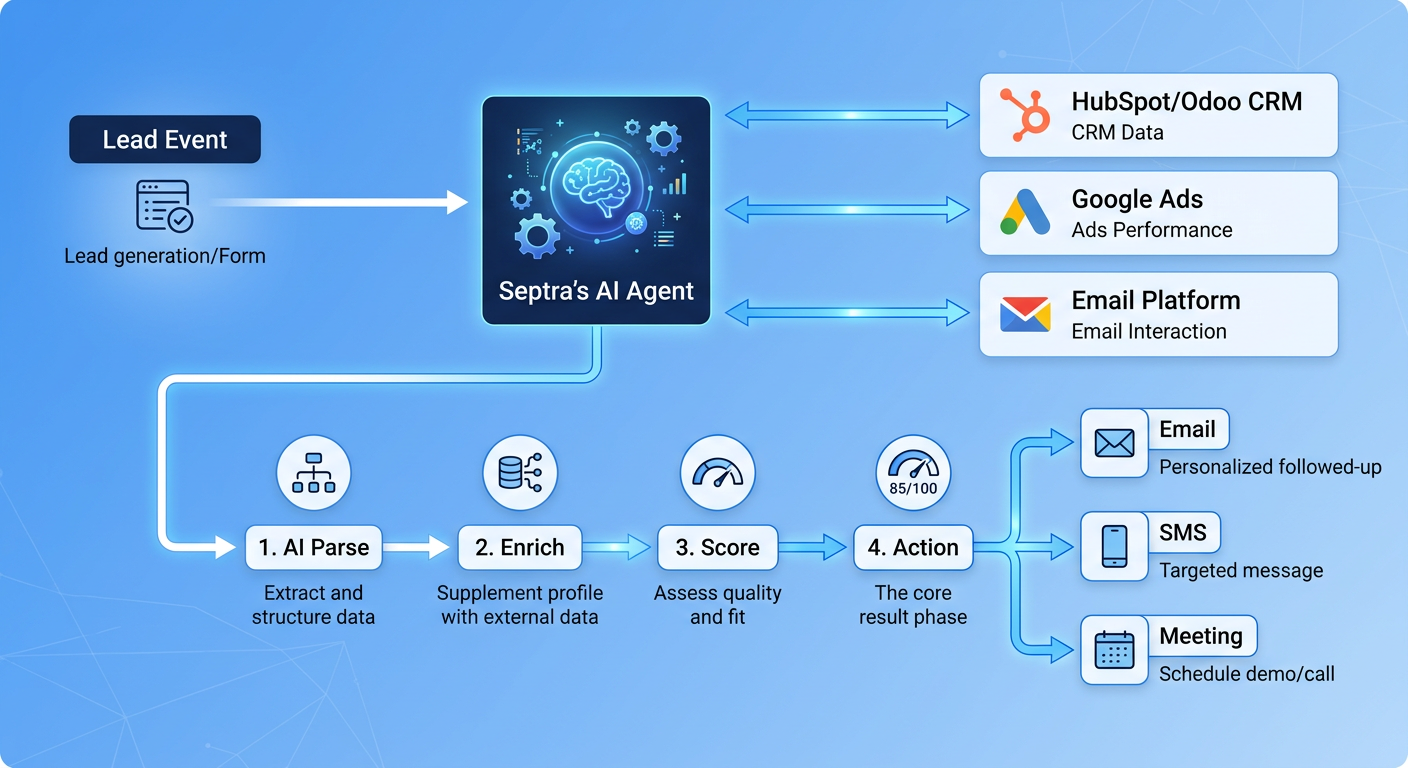
- Parsing form submissions, email replies, and even chat transcripts
- Enriching contact records with firmographic and intent data (e.g., company size, job title, recent funding)
- Automatically logging everything into HubSpot, Odoo, or any connected CRM
Septra’s lead capture module uses NLP to extract key details from free-text inquiries and maps them to your custom fields — no manual data entry required.
Qualification: Let AI Score and Route Every Lead
Not all leads are created equal. Your best deals often come from prospects who show buying signals: repeated visits to pricing pages, engagement with case studies, or specific job titles. AI tools can:
- Apply dynamic lead scoring based on behavioral and firmographic data
- Trigger different workflows for hot, warm, and cold leads
- Route high-intent leads directly to your phone or calendar
For example, a HubSpot contact who visits the pricing page three times in a day and opens two sales emails might automatically get a “hot lead” tag and a meeting booking link sent via SMS. Meanwhile, cold leads receive a drip nurture sequence. All without human intervention.
Nurturing: Multi-Step Sequences That Adapt
Generic email blasts don’t work. Today’s buyers expect personalized, context-aware communication. Multi-step task automation is becoming standard in AI tools, meaning your sequences can span email, SMS, social touchpoints, and even follow-up actions like updating CRM stages.
- Send a personalized video after a demo request
- Follow up with a relevant case study if the prospect hasn’t opened the initial email
- Schedule a LinkedIn connection request from the founder’s account
Septra’s orchestration layer lets you chain actions across apps — for example, “If lead reaches a 80+ score in Odoo, then create a task in your project management tool and notify the assigned rep via Slack.”
Closing: AI-Assisted Negotiation and Proposal Generation
Closing still requires human judgment, but AI can supercharge it. Tools can:
- Generate personalized proposals by pulling CRM product data and pricing
- Analyze call recordings to suggest next steps and objection responses
- Automate contract e-signature requests once verbal agreement is reached
Because AI sales automation tools train on your past closed-won deals, they get better at predicting which discount level or product bundle will convert a specific lead.
Selecting the Right AI Sales Automation Tool for Your Business
Not every platform is built for SMBs. Some are expensive enterprise suites that require dedicated IT support. Others are too light and only handle email outreach. Here’s what to prioritize when evaluating tools.
Must-Have Capabilities
- CRM-native integration – The tool should read/write directly to your CRM (HubSpot, Odoo, Salesforce) without middleware. Septra’s two-way sync ensures every action updates the lead record in real time.
- Multi-step workflow engine – Not just one-off actions. You need the ability to chain if-this-then-that steps with AI decision points.
- Native or easy-to-connect communication channels – Email, SMS, phone, social, and chat should all be accessible from one dashboard.
- Customizable lead scoring – Avoid black-box models you can’t tune. You need to define what matters: industry, company size, page visits, email engagement.
- Conversational AI that sounds human – Generic chatbot responses ruin trust. Look for tools that use your existing content and brand voice.
Red Flags When Shopping
- “We integrate with everything” but no mention of your specific CRM
- No ability to schedule automations or delay steps
- Requires manual data export/import every time you want to sync
- Pricing per user that balloons as you grow
Many SMBs feel AI integration anxiety — they worry that automation will break existing processes or require too much technical setup. The best platforms offer a visual builder (drag-and-drop flowcharts) and onboarding that maps your current sales steps without code.
Real-World Results: Before and After AI Sales Automation
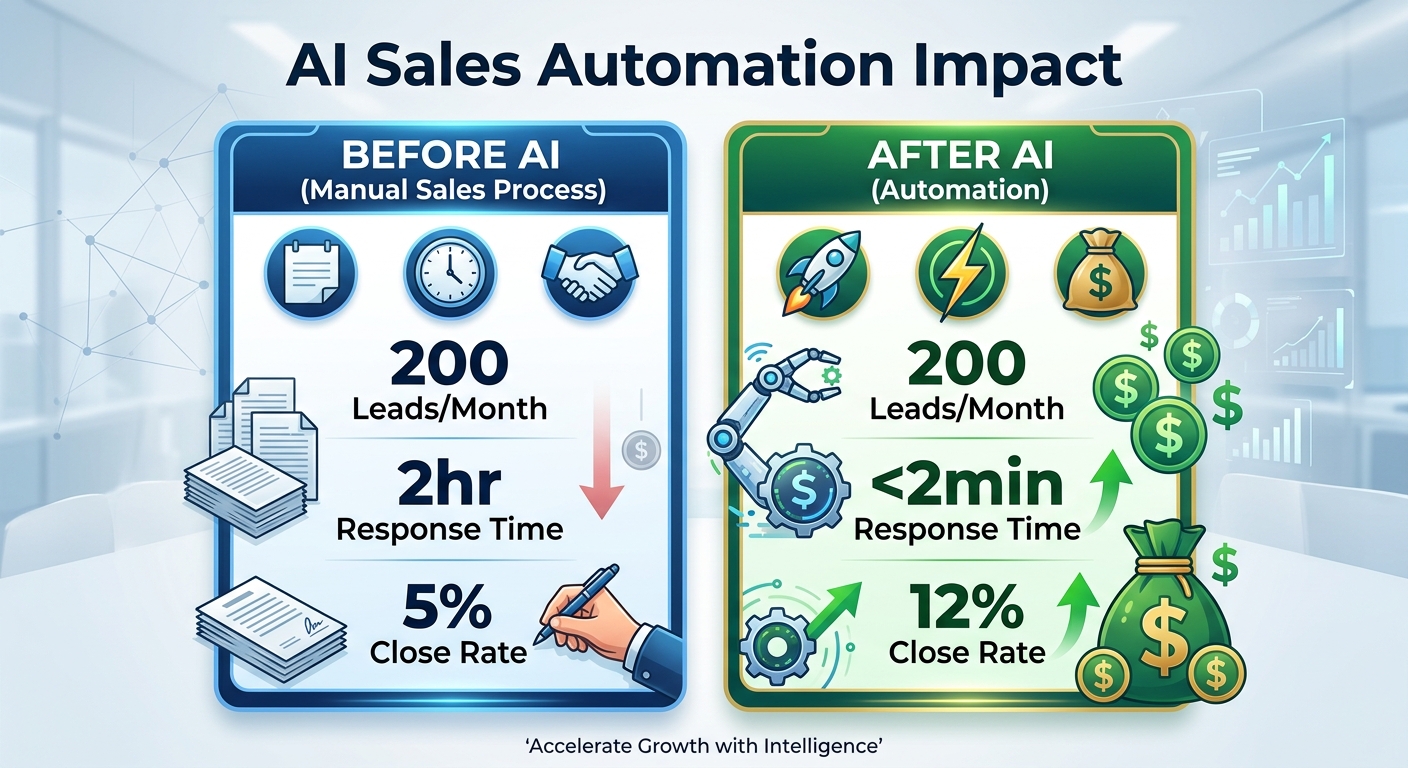
Let’s look at a typical scenario. A B2B SaaS company generates 200 leads per month from Google Ads and content marketing. Before AI:
- Manual lead processing takes 8 hours per week
- Response time averages 2 hours
- Only 30% of leads get followed up within 24 hours
- Close rate: 5%
After implementing AI sales automation tools (including CRM-connected agents):
- Lead capture and enrichment happen instantly
- Response time drops to under 2 minutes
- 95% of leads receive automated nurturing within 5 minutes
- Close rate jumps to 12%
That’s a 140% increase in closed deals using the same ad spend — without hiring a single additional salesperson. The tools paid for themselves within the first month.
Implementing AI Sales Automation Without Overwhelming Your Team
You don’t need to automate everything overnight. The smartest approach is a phased rollout:
Phase 1: Lead Capture + CRM Sync
- Connect your form submissions and email inbox to your CRM (Septra makes this a one-click setup)
- Enrich contacts automatically
- Set up simple triggers: “When a new lead arrives, send a welcome email and add to a nurturing list”
Phase 2: Lead Scoring and Routing
- Define your ideal lead profile
- Create score thresholds (e.g., 70+ = hot, 40-69 = warm, <40 = cold)
- Route hot leads to a sales rep or booking link; cold leads to a drip campaign
Phase 3: Multi-Channel Sequences
- Build a sequence that combines email, SMS, and social touches
- Use AI to decide the best channel and timing for each prospect
- Monitor open rates and click-throughs; let the tool auto-optimize
Phase 4: Closed-Loop Analytics
- Track which automations contributed to deals
- Feed closed-won data back into the AI to improve scoring models
- Scale what works, kill what doesn’t
By taking this gradual approach, your team adapts without feeling replaced. The AI handles repetitive tasks; humans focus on relationship-building and strategy.
FAQ: AI Sales Automation Tools
Q: Can AI sales automation tools replace my sales team entirely? A: No. These tools are designed to augment your team, not replace it. They handle lead qualification, nurturing, and scheduling — freeing your reps to focus on high-value conversations and closing. Many businesses see a 2-3x increase in productivity per salesperson.
Q: Do I need technical skills to set up AI sales automation? A: Modern platforms like Septra offer visual drag-and-drop builders and pre-built integrations for HubSpot, Odoo, and other CRMs. If you can set up an email sequence, you can configure AI automation. A typical onboarding takes less than a day.
Q: How do AI tools personalize outreach without sounding robotic? A: They use your existing content library, past sales conversations, and CRM history to craft messages that match your brand voice. Natural language generation (NLG) has advanced rapidly — prospects often can’t tell the difference between a human-written email and an AI-generated one that’s been personalized with their name, company, and pain point.
Q: What’s the typical ROI on AI sales automation tools for an SMB? A: Most clients report a 3x to 5x ROI within the first quarter. Savings come from reduced manual labor (eliminating data entry, follow-up, segmentation) plus revenue lift from faster response times and higher conversion rates. Tools like Septra offer transparent pricing with no per-user fees, so scaling is affordable.
Conclusion: The Future of Sales Is Connected AI
Generic AI tools can write blog posts and answer questions, but AI sales automation tools that plug into your existing systems — your CRM, your ads, your email — are what actually grow your bottom line. The shift from enterprise AI to SMB-friendly solutions is happening right now. Multi-step workflows, domain-specific models, and real-time CRM integration are no longer reserved for companies with million-dollar IT budgets.
Septra AI was built for business owners who are tired of manual work and want AI connected to their real data. Whether you use HubSpot, Odoo, or another platform, Septra turns every lead into an opportunity that gets nurtured immediately. No more missed follow-ups. No more slow handoffs. Just a revenue engine that runs 24/7.
Ready to stop losing deals to delays? Book a demo of Septra AI today and see how your CRM becomes a sales automation powerhouse.
Ready to build your own AI app?