Google I/O 2026: New AI Releases for Business Automation & Septra AI
Introduction
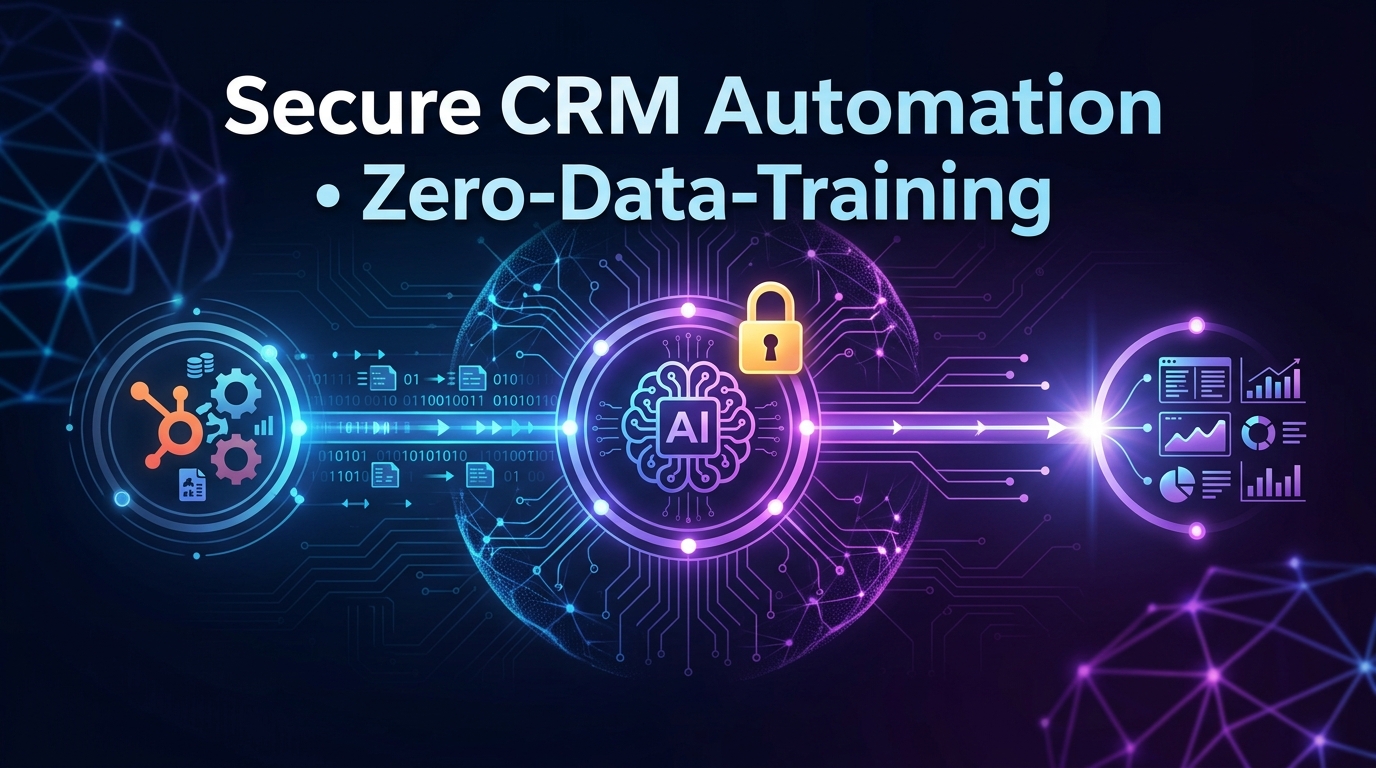
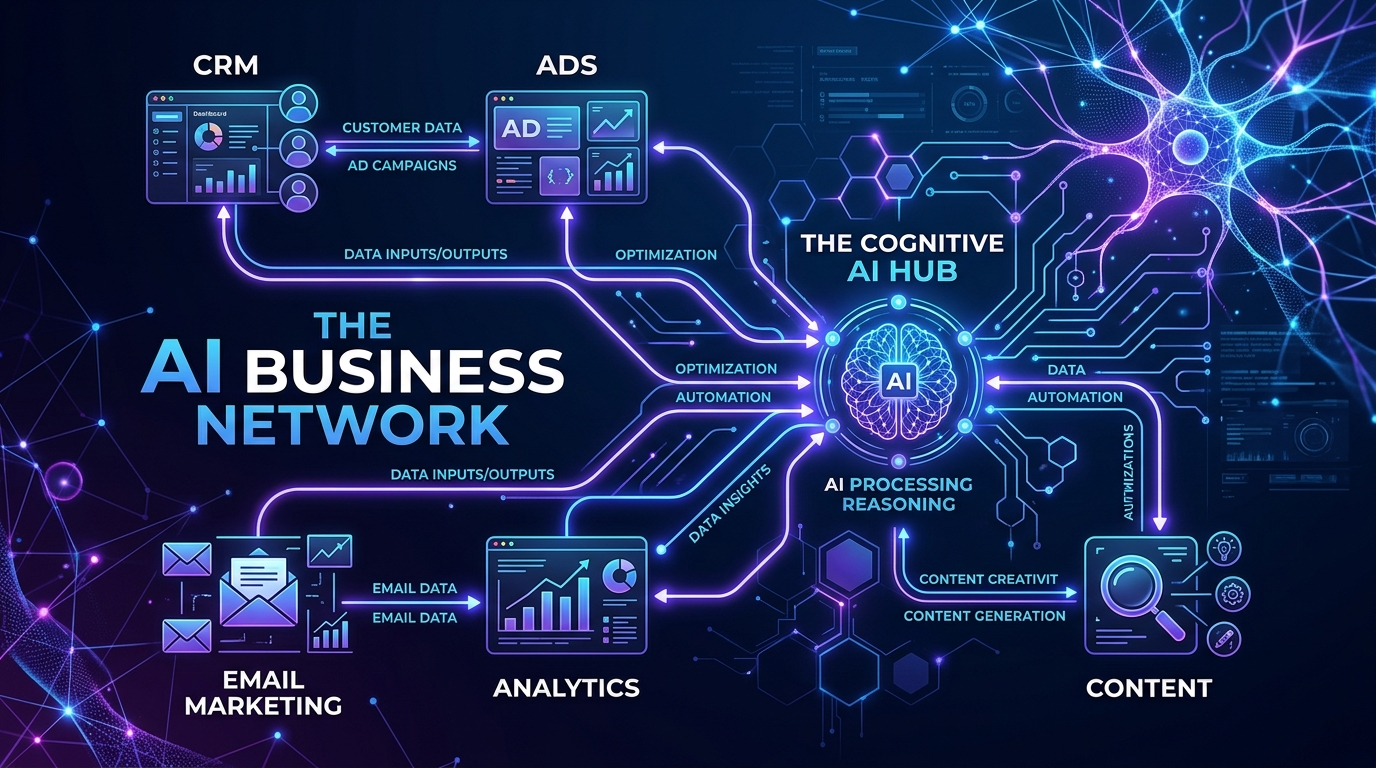
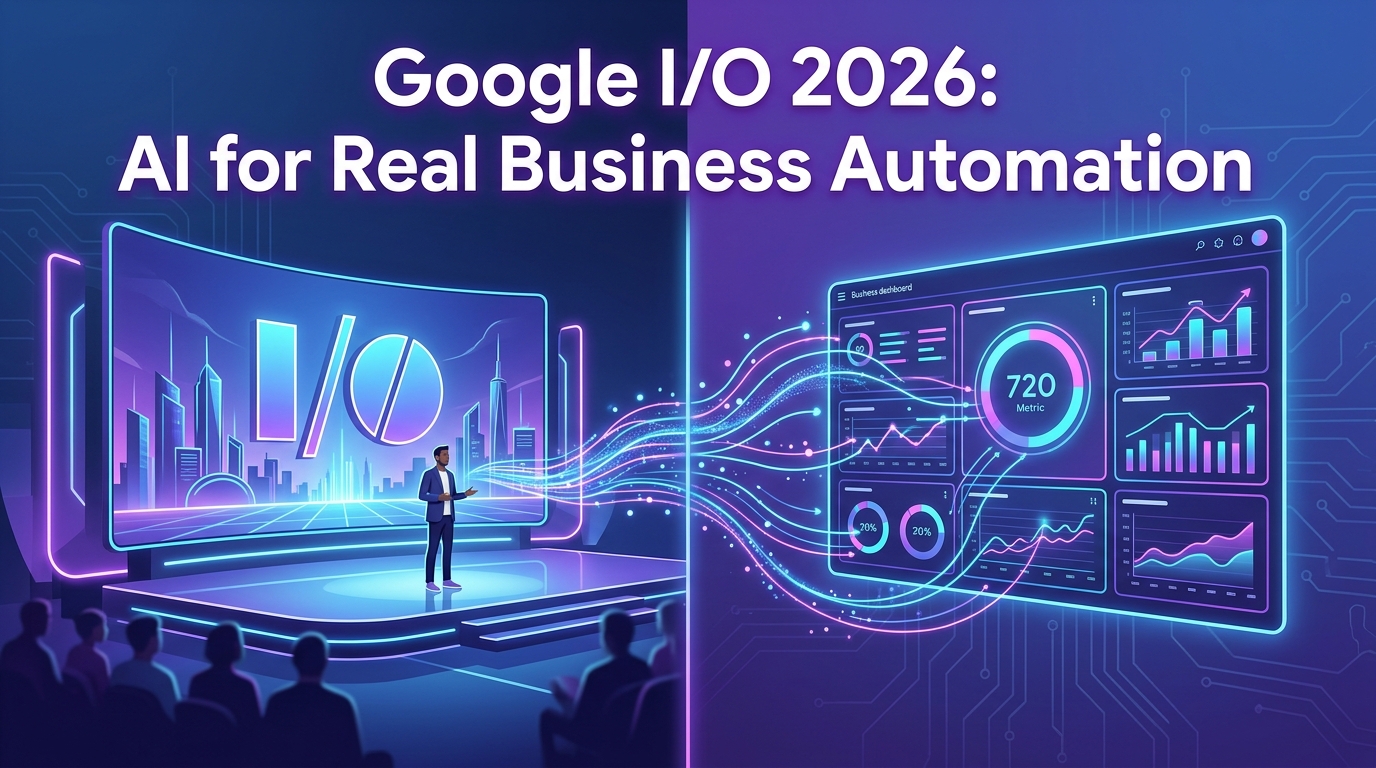
Every year, Google I/O sets the direction for the next wave of AI innovation. In 2026, the announcements were less about flashy demos and more about practical, business-ready automation. For business owners drowning in manual tasks—syncing CRMs, tweaking ad campaigns, optimizing content—the new Google I/O 2026 releases signal a turning point. But here's the catch: these powerful tools are only as good as the data they connect to. That's where Septra AI comes in. Septra bridges Google's cutting-edge AI with your real business systems—HubSpot, Odoo, Google Ads—so you can stop wasting time on generic ChatGPT advice and start automating what actually moves revenue.
The Shift from Enterprise-Only AI to SMB-Ready Automation
One of the biggest themes of Google I/O 2026 was the democratization of AI. Past releases often catered to large enterprises with dedicated data science teams. This year, Google launched a suite of AI tools explicitly designed for small and medium businesses—no PhD required.
Gemini for Small Business
Google introduced Gemini for Small Business, a lightweight, pre-configured AI layer that integrates directly with Google Workspace, Google Ads, and Google My Business. It comes with built-in automation templates for repetitive tasks like email follow-ups, lead scoring, and basic customer support.
For example, a local service provider can now have Gemini automatically pull new leads from Google Business Profile messages, score them based on historical conversion data, and push high-priority leads into a CRM—all without a single line of code.
Why This Matters for Your Business
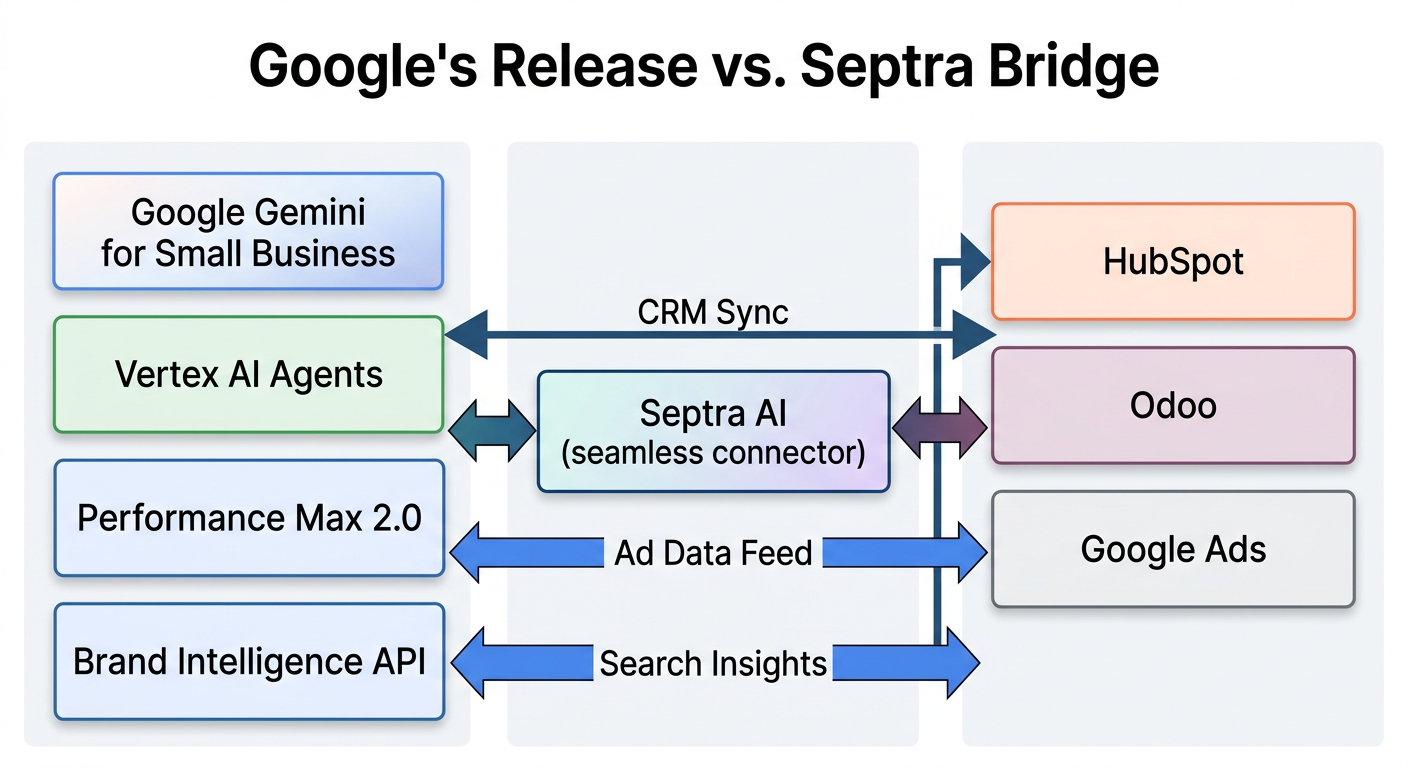
These new releases signal that Google is finally addressing the "integration anxiety" that has plagued SMBs. But even the best out-of-the-box tools need a bridge to your current stack. Septra AI acts as that bridge, connecting Google's new SMB AI to your CRM (HubSpot, Odoo) and ensuring the data flow is bidirectional, clean, and actionable.
Multi-Agent Workflows: Automating Complex, Multi-Step Tasks
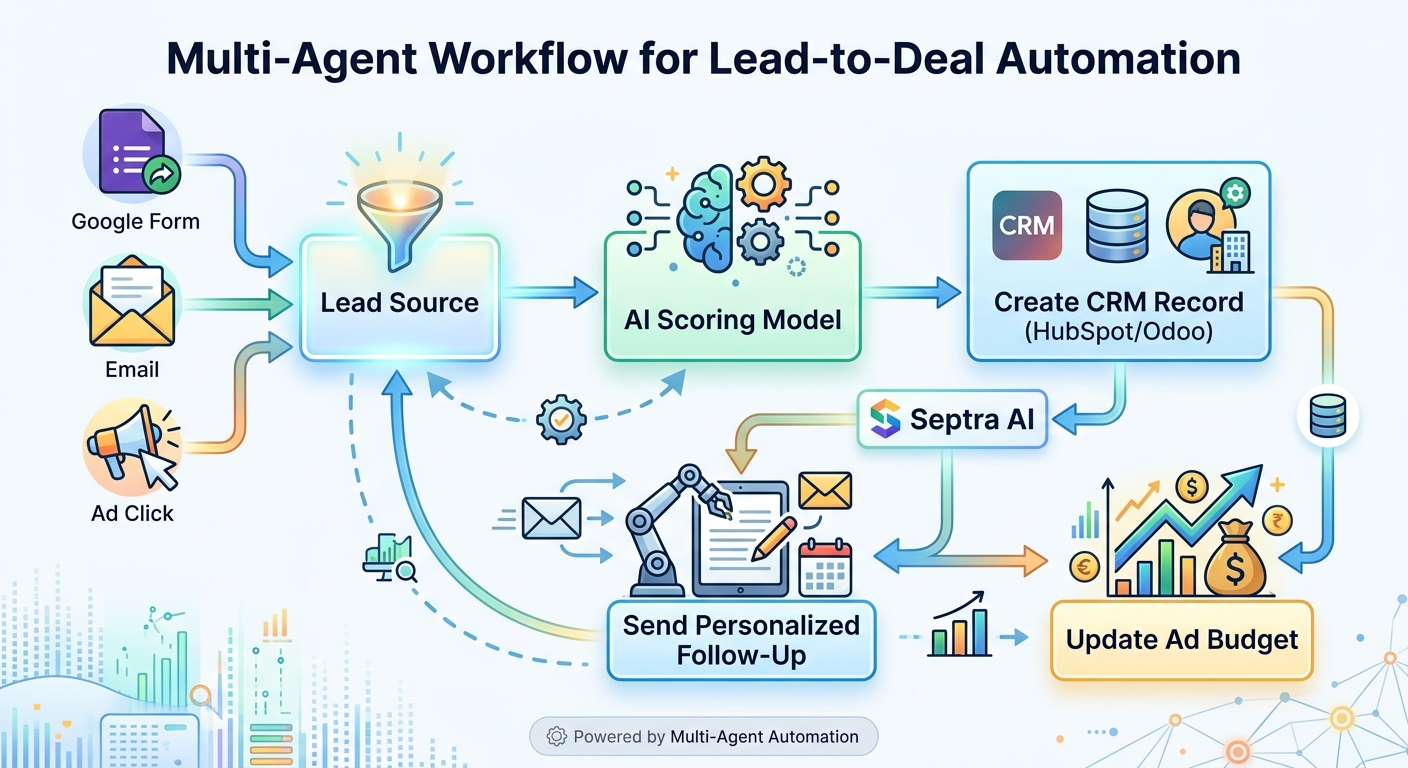
Perhaps the most impactful Google I/O 2026 release was Vertex AI Agent Orchestrator. This platform allows businesses to chain multiple AI agents together to complete complex, multi-step workflows across different applications.
Real-World Example: From Lead to Closed Deal
Previously, a new lead might trigger a single chatbot response. Now, with Agent Orchestrator, you can create a workflow that:
- Identifies a new lead from a Google Form, email, or ad click.
- Runs the lead through a custom scoring model (trained on your past closed deals).
- Creates a contact record in HubSpot or Odoo.
- Sends a personalized follow-up sequence via email or SMS.
- Updates an ad campaign budget if the lead is high value.
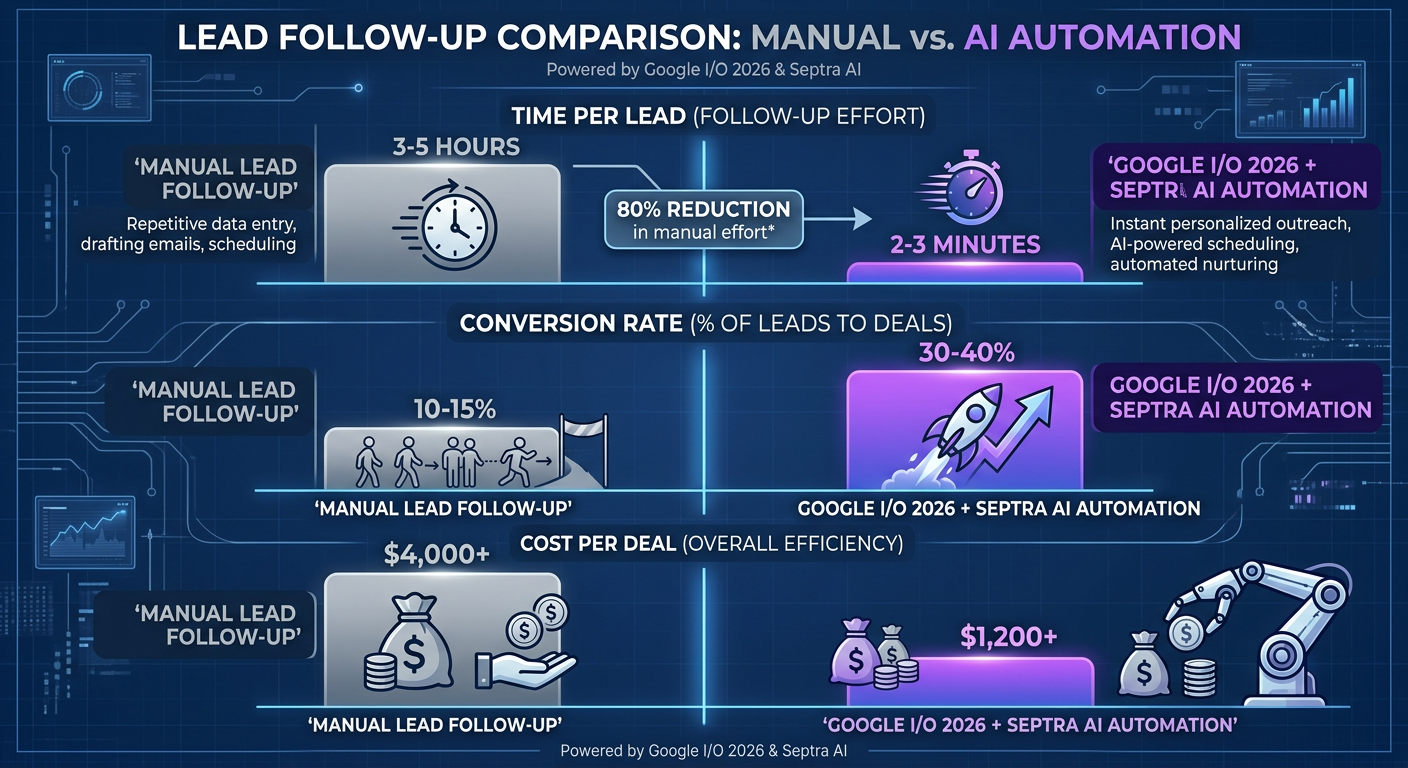
All of this happens in minutes, not days. And because Septra AI sits between Google's agents and your operational systems, you get full visibility and control over every step.
Multi-Step Automation with Scheduled Triggers
Google also announced Scheduled AI Pipelines within Vertex AI. You can now set recurring automation tasks—like weekly ad performance reviews, monthly lead list cleaning, or quarterly SEO content audits—that run autonomously. This directly reduces the manual overhead your team deals with every month.
Domain-Specific AI Models for Sales, Marketing, and Ads
Another major announcement was the expansion of Industry-Fine-Tuned Models on Google Cloud. Instead of forcing a general-purpose model to understand your business niche, Google now offers pre-trained models specialized for functions like sales pipeline management, ad copy generation, and SEO keyword clustering.
Sales-Focused AI
A new model called Gemini Sales Optimizer is trained on millions of closed sales interactions. It can analyze your CRM data to predict which leads are most likely to convert, suggest optimal follow-up times, and even draft personalized proposals using your historical templates.
Marketing and SEO Automation
For SEO automation, Google released Search Intelligence AI, which analyzes search trends, competitor content gaps, and user intent at a granular level. Combined with Septra AI, this tool can automatically generate blog outlines, optimize existing pages, and suggest internal linking structures—all based on your specific business data, not generic keyword lists.
Bridging the Gap Between Brand Strategy and AI Search Optimization
A recent study showed that CMOs rank brand building as their #1 priority, yet AI search optimization ranks only #17. This disconnect is a massive opportunity for businesses that can do both. Google I/O 2026 addressed this with Brand Intelligence for AI Search, a new set of APIs that help businesses track and influence how their brand appears across AI-generated search summaries, Google Assistant responses, and Gemini-powered experiences.
How to Compete in the AI Search Era
- Structured data is now table stakes. Google's new schema recommendations include brand-specific attributes (tone, values, USPs) that help AI models present your brand accurately.
- Content clusters matter more than ever. Google's AI now rewards topical authority over single-page optimization. Septra AI can automatically build content clusters from your CRM data (case studies, product specs, customer success stories) and map them to high-intent search queries.
- Real-time reputation management. The new Brand Intelligence API can alert you when an AI summary misrepresents your business, allowing immediate corrections.
Septra AI integrates these signals into a single dashboard, so you don't have to jump between Google Cloud Console, your CRM, and your ad manager to stay competitive.
Google Ads Optimization with AI: From Manual Bidding to Full Automation
Google Ads saw some of the most practical updates at I/O 2026. Performance Max 2.0 now includes AI-generated ad assets that automatically test dozens of headlines, descriptions, images, and call-to-action buttons—then dynamically serve the best combination for each user segment.
Conversion-Linked Budget Allocation
The new Budget AI feature adjusts your daily budgets in real-time based on predicted conversion value. It doesn't just watch for clicks; it analyzes lead quality signals from your CRM (closed deals, deal size, lifetime value) and shifts spend toward the most profitable audiences.
How Septra AI Amplifies These Updates
While Google's native AI is powerful, it works best when fed high-quality, structured data. Septra AI ensures that your HubSpot or Odoo CRM data—deals, contacts, customer lifetime value—flows seamlessly into Google Ads. This means:
- More accurate conversion tracking (no more double-counting or missing data).
- Richer audience segments based on real purchase history, not just website visits.
- Automated negative keyword lists generated from your CRM's lost deals and return reasons.
FAQ: Google I/O 2026 Releases and Septra AI
Q: What are the most important Google I/O 2026 releases for my business? A: The key releases are Gemini for Small Business, Vertex AI Agent Orchestrator, Industry-Fine-Tuned Models (sales/marketing/ads), Brand Intelligence for AI Search, and Performance Max 2.0. Each addresses a core business need: automation, integration, and personalization.
Q: How does Septra AI help me use these new Google features? A: Septra AI acts as the bridge between Google's AI tools and your actual business systems (HubSpot, Odoo, Google Ads). It ensures data flows both ways—AI insights go into your CRM, and high-quality CRM data feeds Google's models—so you get accurate, actionable automation.
Q: Do I need technical expertise to implement multi-agent workflows? A: Not with Septra AI. While Vertex AI Agent Orchestrator requires some configuration, Septra provides pre-built workflow templates and a no-code interface that connects Google's agents to your CRM and ad accounts. Setup takes hours, not months.
Q: How soon should I start leveraging these Google I/O 2026 updates? A: Immediately. Early adopters will see the biggest competitive advantage, especially in search and advertising. With Septra AI, you can pilot a small automation workflow (e.g., lead-to-deal pipeline) in under a week and scale from there.
Conclusion: Stop Treating AI Like a Black Box—Connect It to Your Real Data
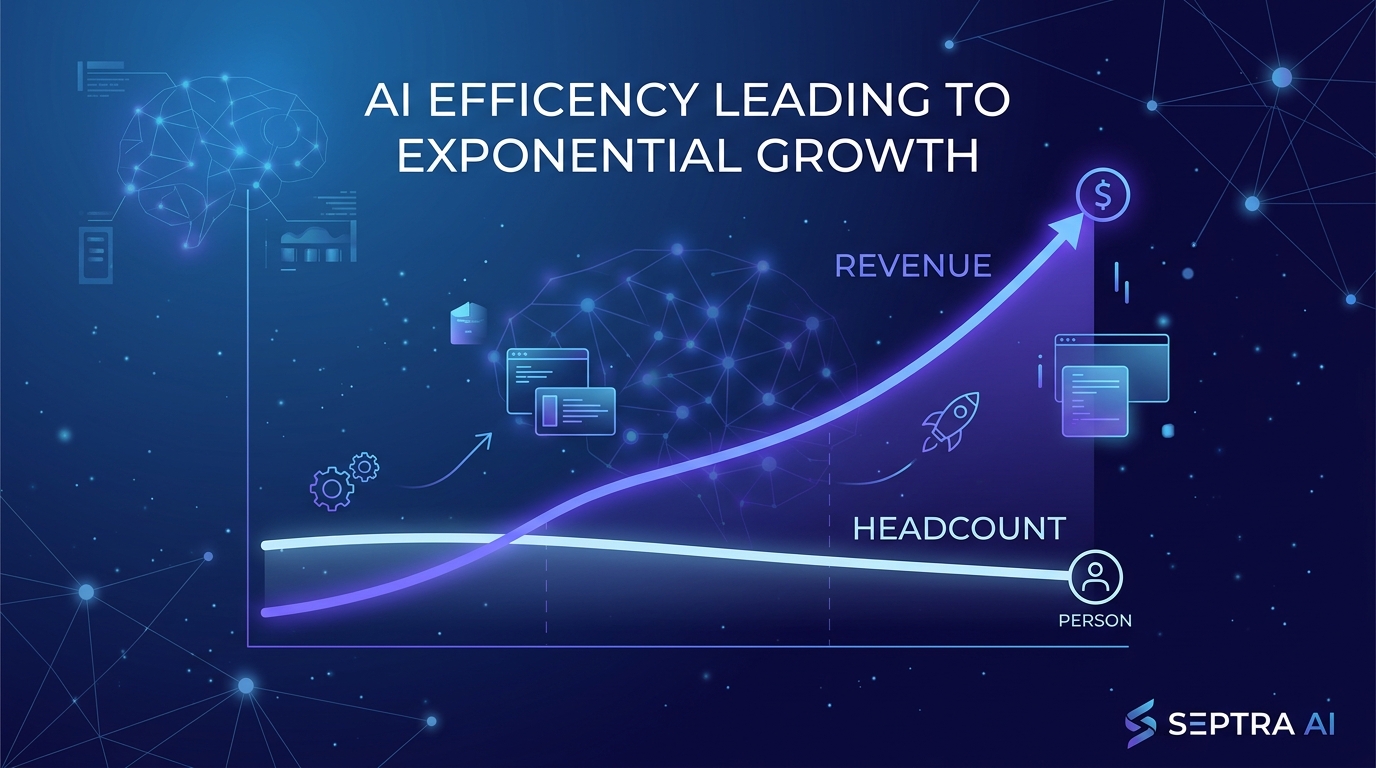
Google I/O 2026 delivered exactly what businesses have been asking for: practical, integrated AI tools that reduce manual overhead and scale operations without hiring. But the true power of these new Google I/O 2026 releases for Septra AI users is the ability to connect every AI output to real, verified business data.
Your CRM is the source of truth. Your ad campaigns are the engine. Your content strategy is the magnet. Septra AI ties them all together, so you can make data-driven decisions without the grunt work.
Ready to see how Septra AI connects Google's latest releases to your HubSpot, Odoo, or Google Ads? [Get started with a free trial today] — no coding, no data migration headaches, just real automation that moves your business forward.
Ready to build your own AI app?