How to Reduce Manual Overhead with AI Integration for Real ROI
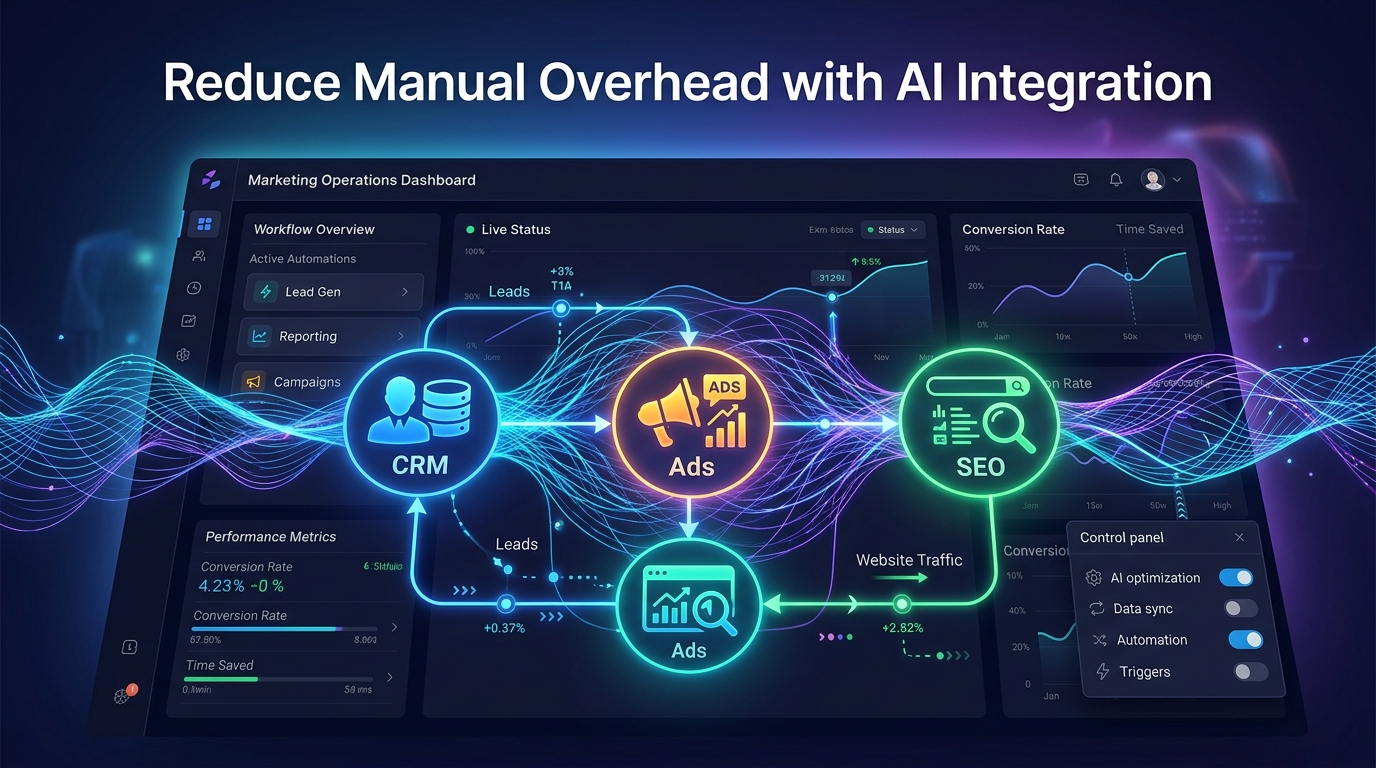
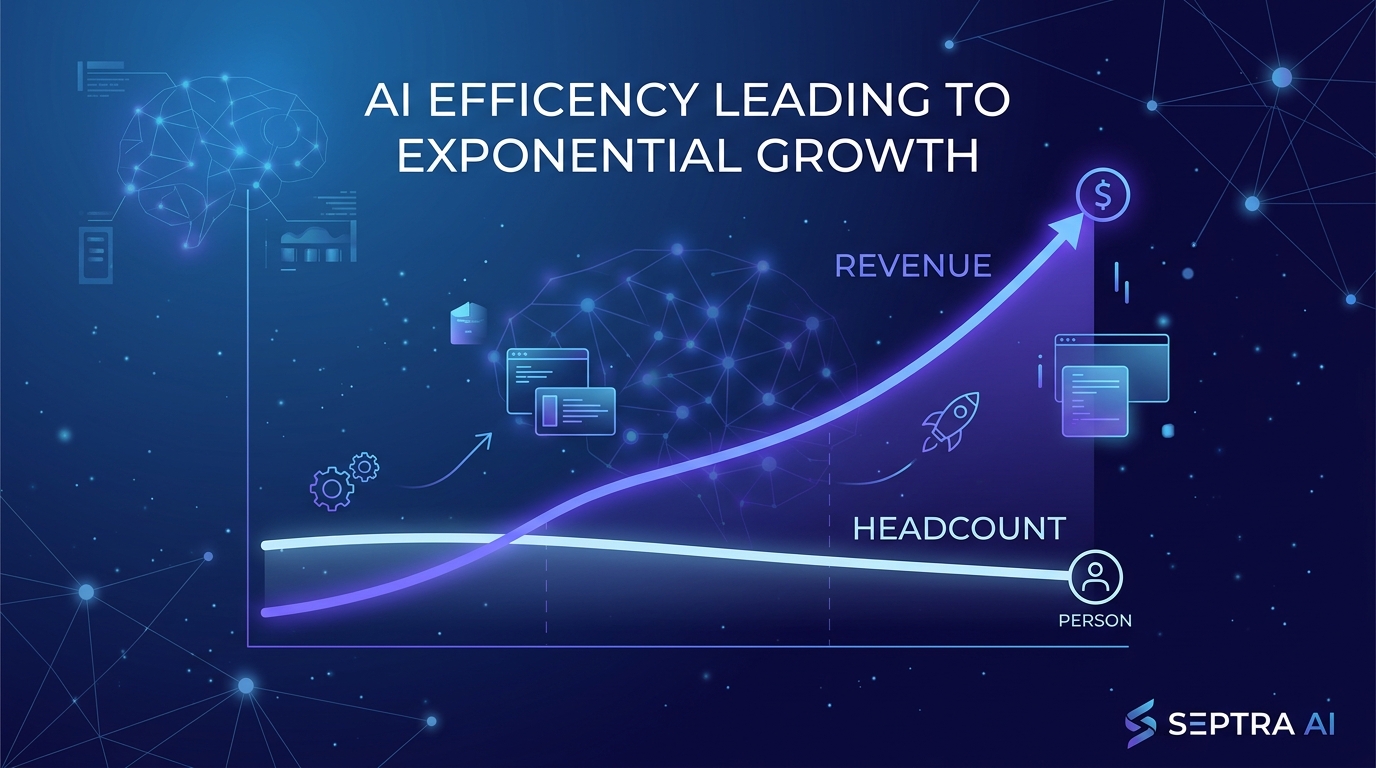
Your business is bleeding hours into tasks that add zero strategic value. Manually entering CRM data, tweaking Google Ads bids, stitching together SEO reports—these are the invisible drains on your margins. The fix isn't hiring more people; it's connecting AI directly to your real business systems. This is how you reduce manual overhead with AI integration, cut operational costs, and scale without adding headcount.
The True Cost of Manual Overhead in SMBs
Most small and mid-size business owners don't realize how much manual work eats into profit. Let's put a number on it.
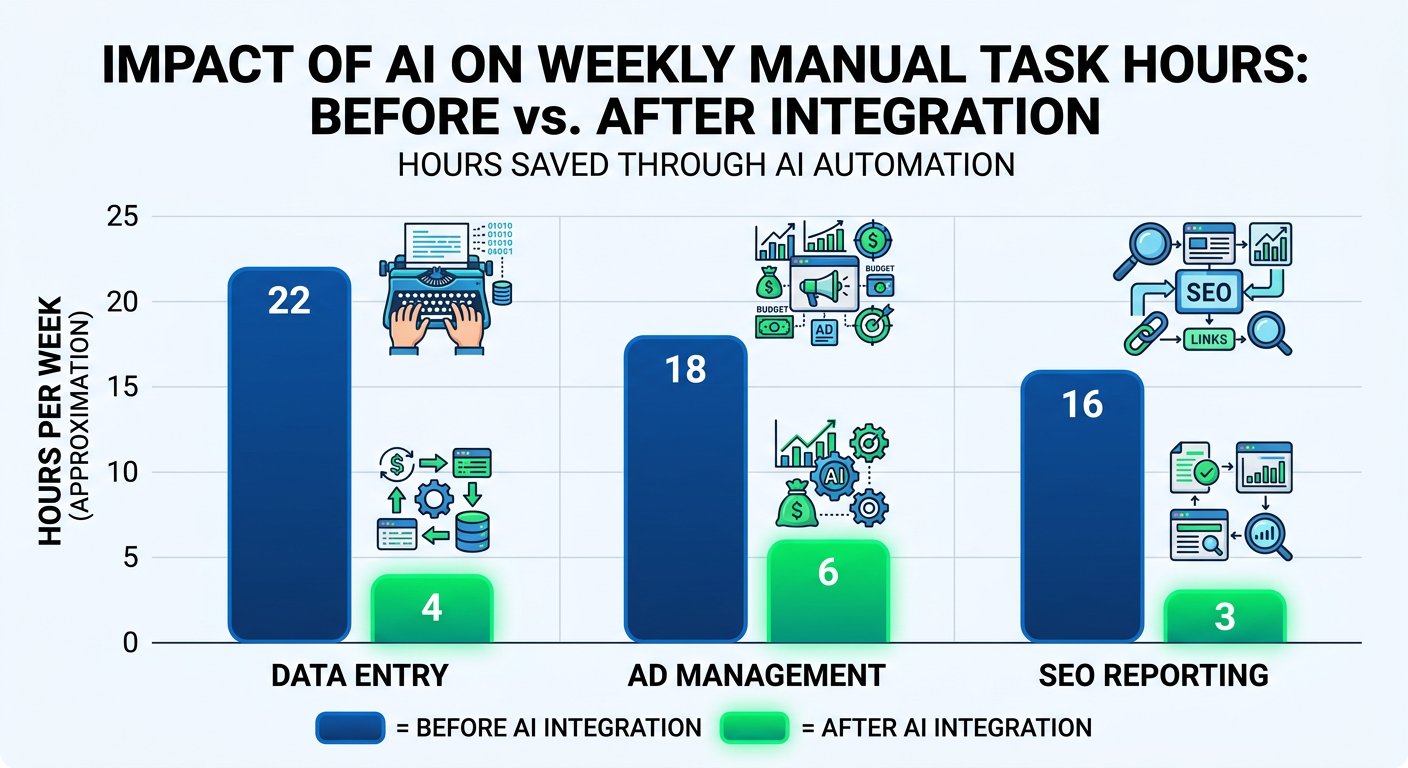
Hours Lost Per Week
- Data entry and CRM updates: 5–10 hours
- Ad account adjustments and bid management: 3–5 hours
- SEO keyword research and reporting: 4–6 hours
- Email follow-ups and scheduling: 3–4 hours
That's 15–25 hours per week per person—time that could go to strategy, sales, or rest. Multiply by average salary cost, and manual overhead easily eats $30,000–$60,000 per employee annually.
The Hidden Opportunity Cost
Every hour spent on manual, repetitive work is an hour not spent on revenue-generating activities. A recent study found that 60% of SMB owners cite operational inefficiency as their #1 growth barrier. Automating those tasks doesn't just save money—it unlocks growth.
How AI Integration Eliminates Repetitive CRM Tasks
Your CRM (HubSpot, Odoo, or similar) is supposed to make life easier. But if your team is still manually logging calls, updating contact records, and moving deals through pipelines, you're leaving efficiency on the table.
AI-Powered Data Syncing
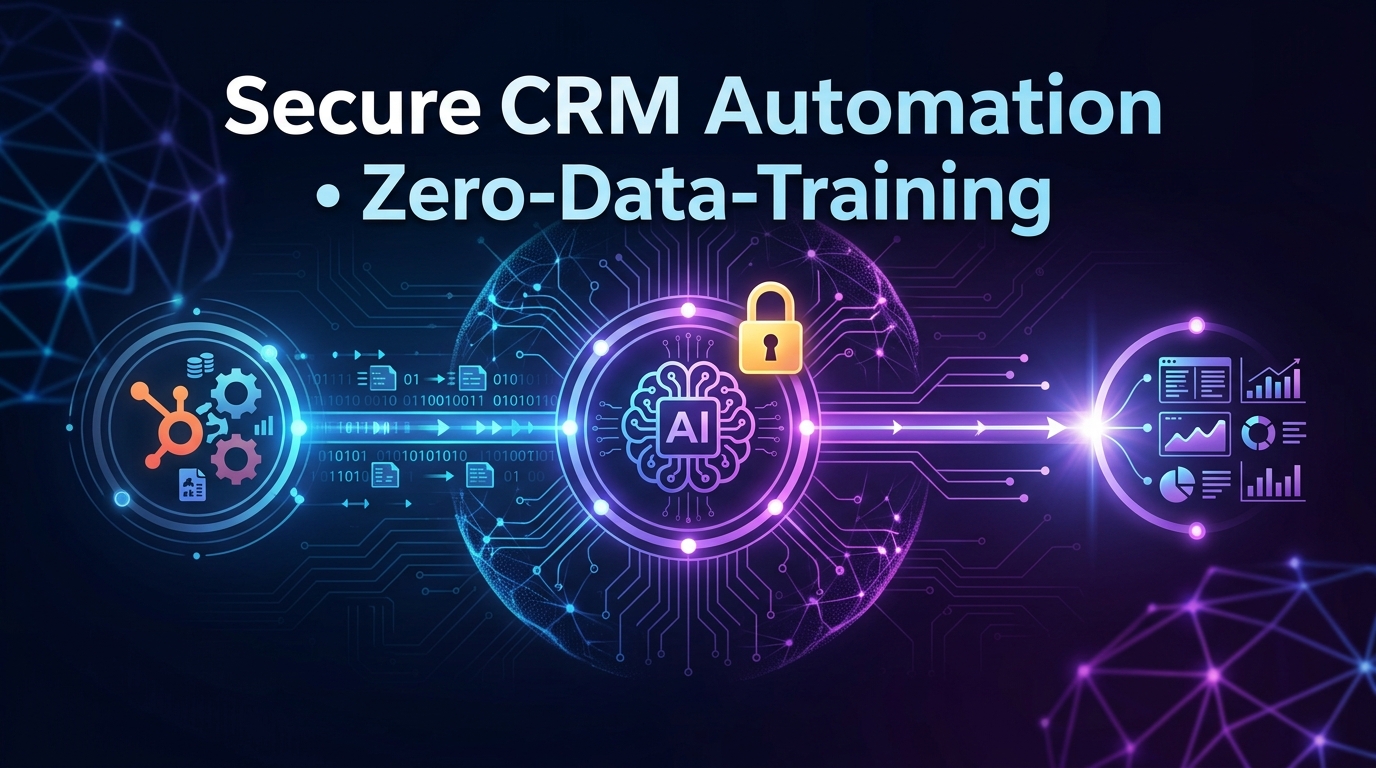
Integrating AI directly with your CRM means every interaction—email, call, form submission—is captured automatically. No more manual entry. The system learns from past data to predict which fields need updating and fills them in real time.
Smart Lead Scoring and Routing
Instead of a sales rep manually reviewing every lead, AI scores each contact based on behavior and fit. Only high-quality leads get routed to human follow-up. Low-priority leads receive automated nurturing sequences. Result: sales teams stop wasting time on dead leads.
Automated Workflow Triggers
Set up multi-step automations that fire based on specific actions. For example:
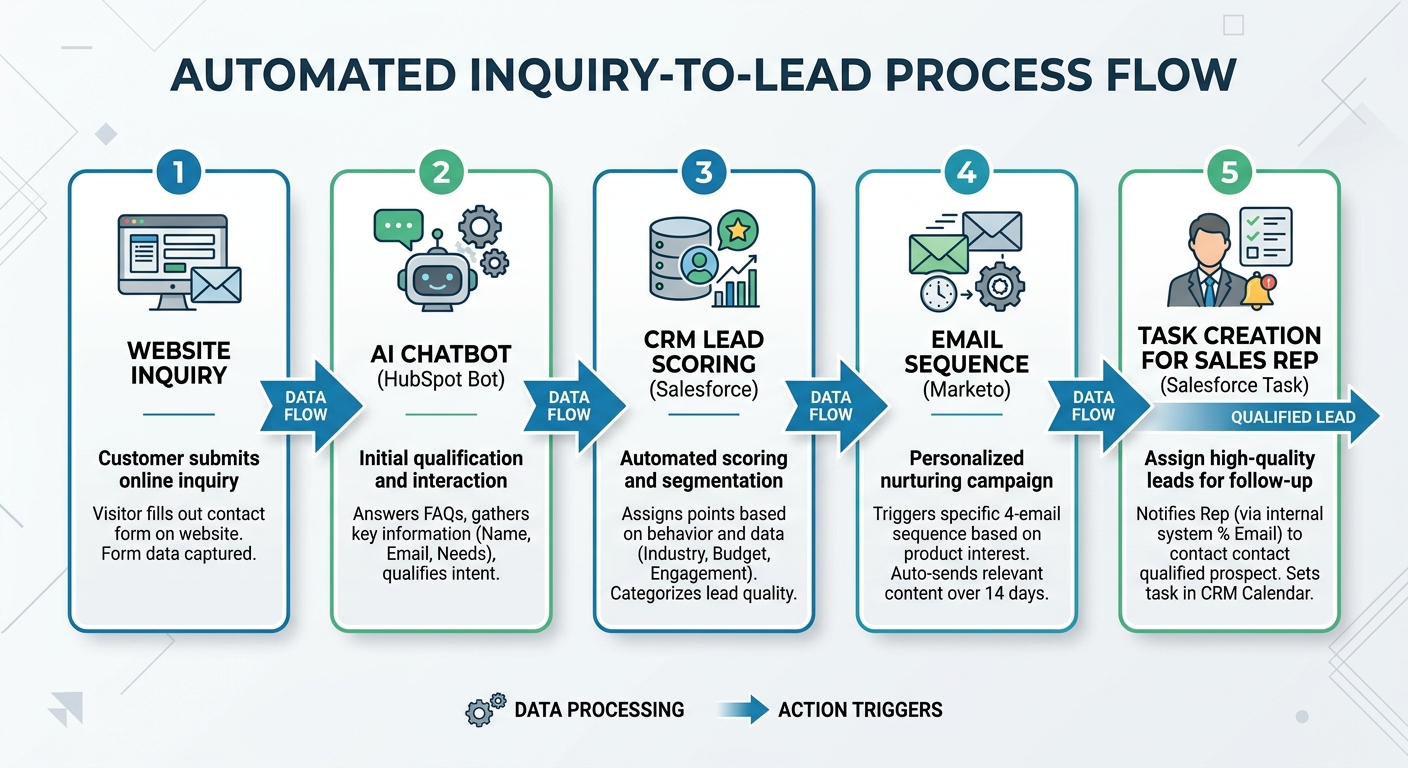
- A new lead fills out a form → AI assigns a lead score → sends personalized welcome email → creates a task for the right salesperson.
- A deal moves to "closed won" → AI updates all related records → triggers an onboarding sequence → sends a customer satisfaction survey 30 days later.
By integrating AI into your CRM, you reduce manual overhead with AI integration and free your team to focus on closing deals.
Automating Google Ads Optimization with AI
Running Google Ads manually is a time sink. Keyword bids change daily, ad fatigue sets in, and A/B testing takes forever. AI automation changes that.
Real-Time Bid Adjustments
Instead of logging into your ad dashboard every morning, AI monitors performance 24/7. It adjusts bids based on device, location, time of day, and even weather patterns. One Septra client saw a 22% drop in CPA after switching from manual to AI-driven bid management.
Automated Ad Copy Testing
AI can generate dozens of ad variants, run them against each other, and kill underperformers—all without human intervention. It learns which headlines drive clicks and which CTAs convert, then scales winners automatically.
Smart Budget Allocation
Manual budgeting often means spreading spend evenly across campaigns. AI analyzes ROI per campaign and shifts budget to top performers in real time. No more guessing where your money works hardest.
SEO Automation: From Research to Reporting
SEO is repetitive by nature. Keyword research, content optimization, backlink monitoring, rank tracking—all necessary, all manually painful. AI automation turns this into a set-it-and-forget-it system.
AI-Driven Keyword Discovery
Instead of manually combing through tools, AI scans your site, competitor pages, and search trends to surface high-opportunity keywords. It groups them by intent and prioritizes based on your current ranking and traffic gaps.
Automated Content Optimization
Once you write a draft, AI checks it against on-page SEO best practices: title tags, meta descriptions, header structure, internal linking. It suggests changes to improve relevance without rewriting everything.
Scheduled Reporting
Every Monday morning (or any frequency you choose), AI generates a full SEO report: rankings, traffic, keyword wins, issues detected. No more spending two hours pulling data from three different platforms.
For businesses trying to reduce manual overhead with AI integration, SEO automation alone can save 8–12 hours per month per account.
Multi-Step Workflows: Beyond Simple Chatbots
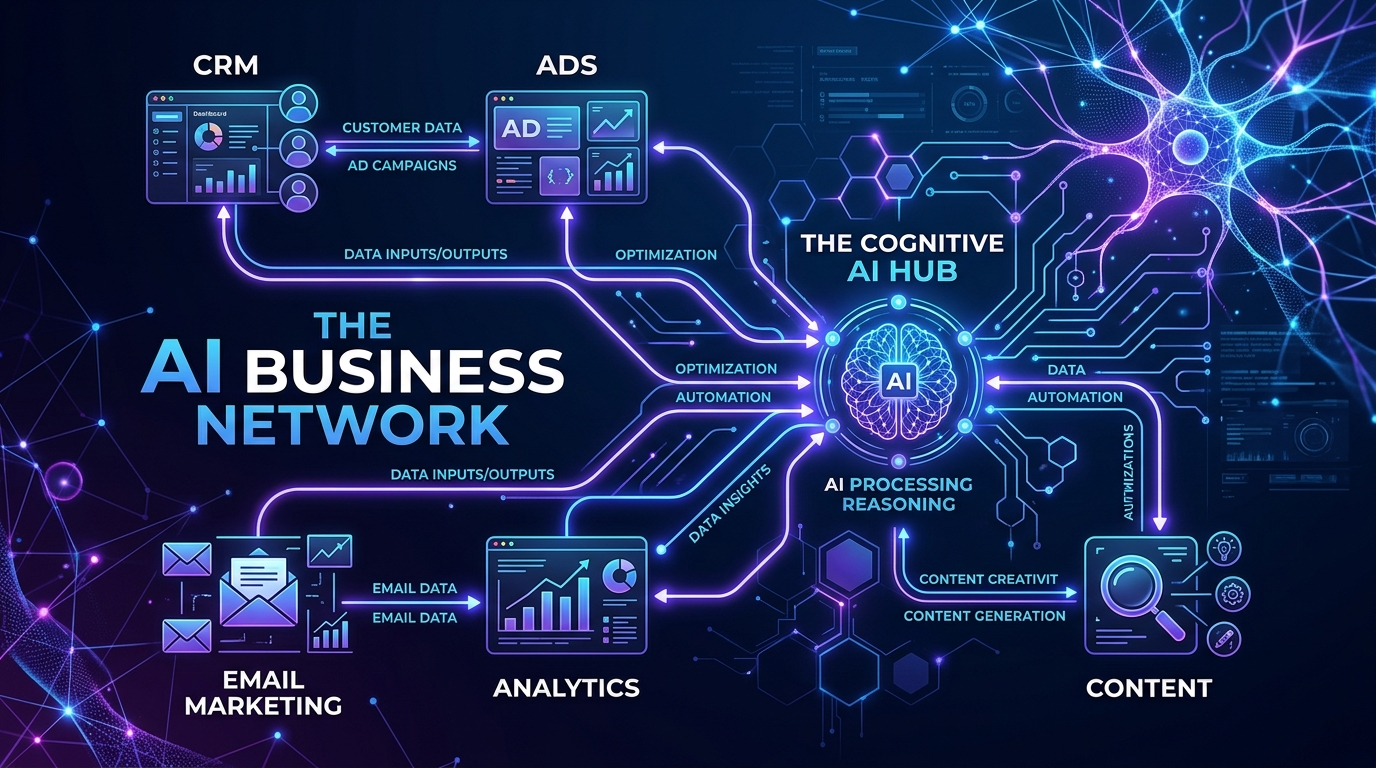
Most AI tools today are single-response chatbots. They answer one question, then stop. True business automation requires multi-step workflows that span multiple applications.
What Multi-Step Automation Looks Like
Imagine a customer inquiry on your website:
- AI chatbot collects the inquiry.
- AI classifies intent (support, sales, billing).
- If sales, AI pulls CRM data to see if they're a returning customer.
- AI creates a new deal in HubSpot and assigns a priority score.
- AI sends a personalized email with relevant case studies.
- AI schedules a follow-up task for the sales rep in two days.
All this happens without a human touching a keyboard. This is the future of business automation—and it's available today.
Reducing Manual Overhead Across Departments
Multi-step workflows aren't just for sales. You can automate:
- Marketing: Trigger email sequences based on content downloads.
- Operations: Auto-generate invoices when a deal closes.
- Customer support: Route tickets based on sentiment and urgency.
By deploying these workflows, you further reduce manual overhead with AI integration and create a business that runs itself in the background.
Measuring ROI: What You Save and Earn
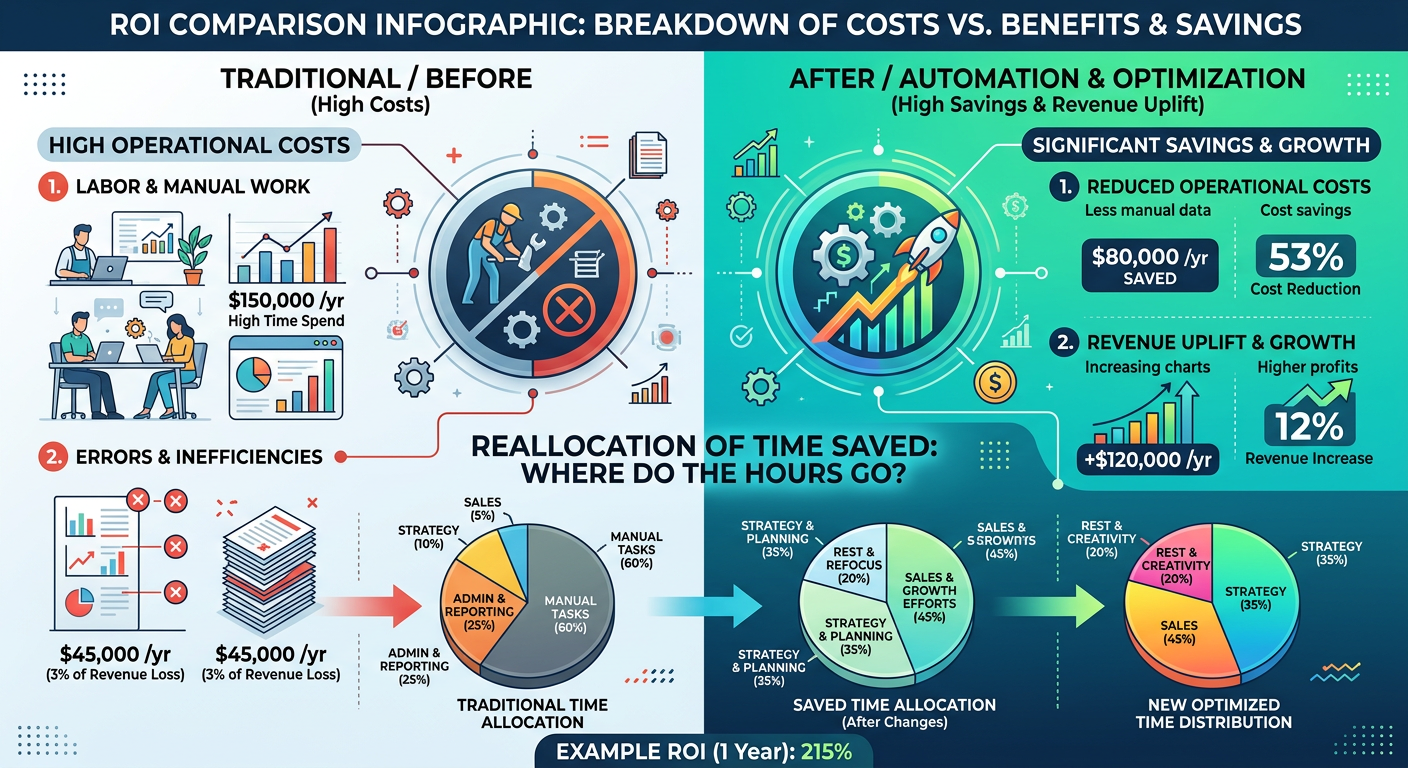
Numbers matter. Here's the real ROI of reducing manual overhead with AI integration.
Direct Cost Savings
- Labor savings: Eliminate 15–20 hours of manual work per week per employee. At $50/hour fully loaded, that's $750–$1,000/week saved per person.
- Error reduction: Manual data entry has a 1–5% error rate. AI reduces that to near zero, saving correction time and costly mistakes.
- Faster processes: Automated workflows reduce lead response time from hours to seconds—boosting conversion rates by up to 30%.
Revenue Uplift
- CRM automation: Higher lead follow-through = 15–25% more closed deals.
- Ad optimization: Lower CPA means you can run more campaigns for the same budget.
- SEO automation: Faster content optimization leads to 2–3x more organic traffic over 6 months.
A typical SMB investing $2,000/month in AI integration sees a 5x–10x return within the first year.
FAQ: Reducing Manual Overhead with AI Integration
Can AI integrate with my existing CRM like HubSpot or Odoo?
Yes. Modern AI automation platforms like Septra offer native connectors for HubSpot, Odoo, and dozens of other tools. They read and write data directly, so you don't need to change your current systems.
How long does it take to see results from AI integration?
Most businesses see tangible savings in the first 4–6 weeks. Initial setup takes 1–3 days for basic workflows. Full automation across CRM, ads, and SEO typically delivers measurable ROI within one quarter.
Will AI replace my employees?
No. AI eliminates tedious manual work so your team can focus on high-value tasks like strategy, relationship building, and creative problem-solving. It's a tool for augmentation, not replacement.
What's the biggest mistake companies make when adopting AI?
Trying to automate everything at once. Start with one high-friction area—like lead data entry or ad bid management—prove the ROI, then expand. A phased approach ensures adoption and avoids disruption.
Conclusion: Stop Working in the Business—Work on It
Manual overhead is a silent profit killer. Every hour spent on repetitive data entry, bid adjustment, or report building is an hour stolen from growth. By adopting AI integration tailored to your CRM, ads, and SEO, you reduce manual overhead with AI integration and free yourself to focus on what matters: leading your business.
Don't let generic chatbots fool you. Septra connects AI directly to your real data—HubSpot, Odoo, Google Ads, and more—so you get real automation with real savings.
Ready to cut manual overhead by 60% and start scaling without hiring? Book a free automation audit with Septra today.
Ready to build your own AI app?