AI agents
How AI marketing agents work, what they should and shouldn't do, and how to evaluate them.
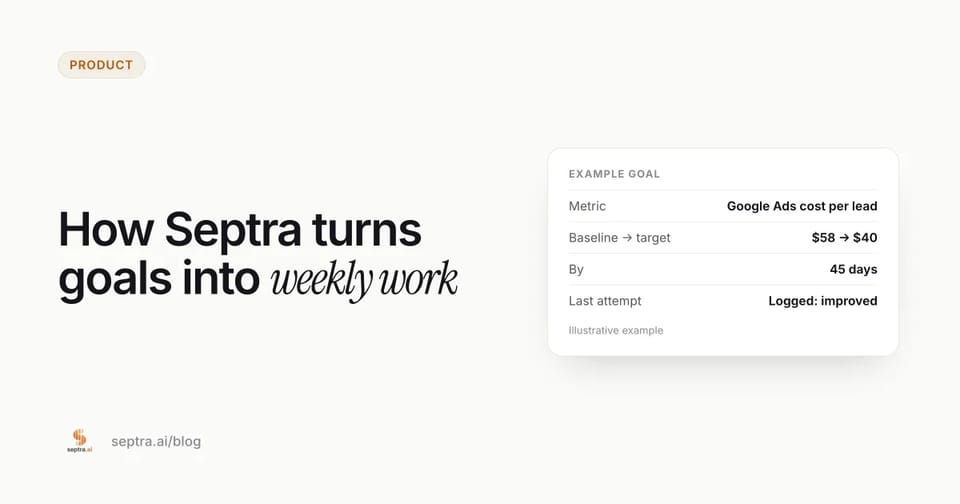
How Septra Turns Your Goals Into Weekly Work
In Septra, a goal is a metric with a baseline, a target and a date, tracked from your connected data. How the AI team plans against it each week, logs what worked, and asks before changing anything that matters.
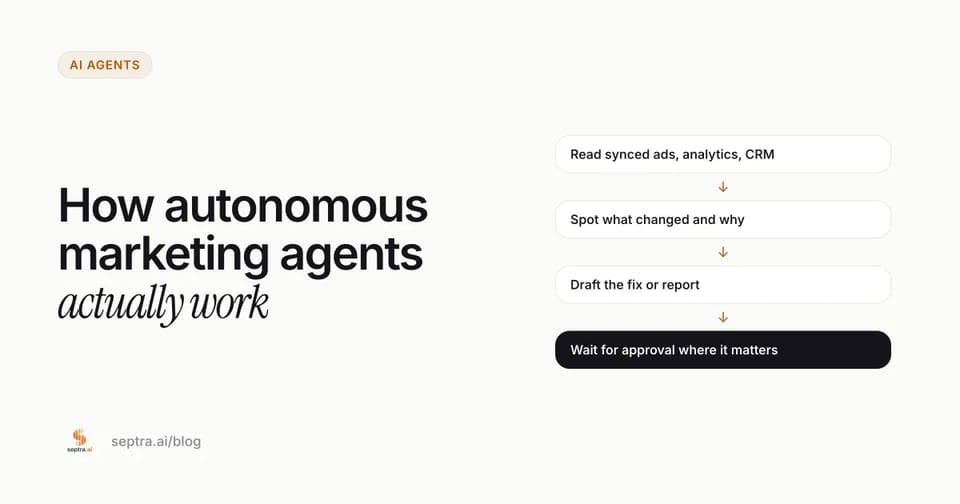
How Autonomous Marketing Agents Actually Work
What an AI marketing agent does in a normal week, what it needs access to, where it should stop and ask, and how to tell a real one from a chatbot with a schedule. With the exact rules Septra’s agents follow.
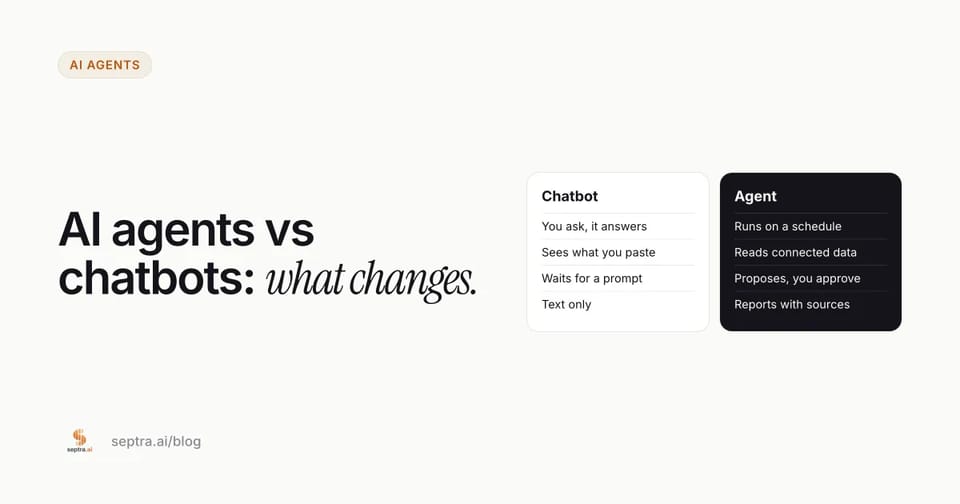
AI Agents vs Chatbots: What Actually Changes
Chatbots now have memory and connectors, so the old “chatbots can’t do anything” line is wrong. The real differences are who starts the work, what data it reads, and what it may change without asking.
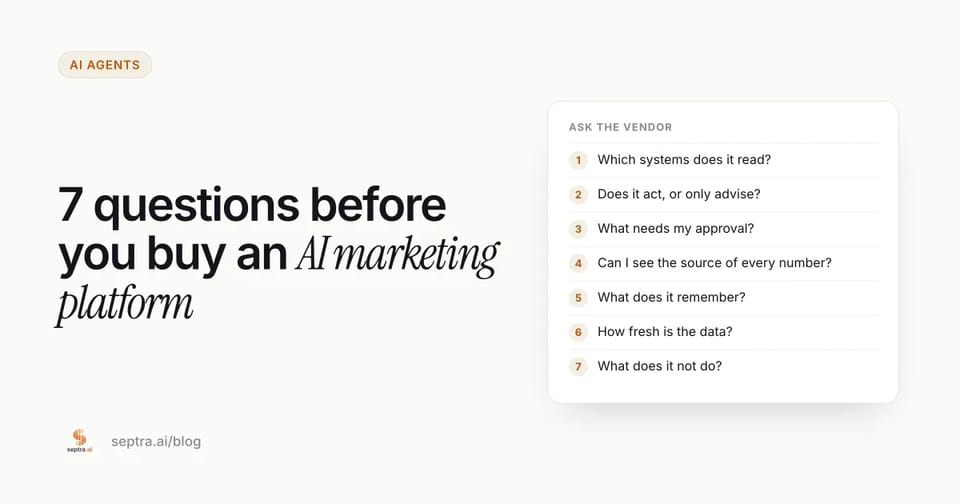
7 Questions to Ask Before You Buy an AI Marketing Platform
A vendor-neutral checklist for evaluating AI marketing agents: what data they read, what they can change, what needs approval, whether numbers are traceable, and what they don’t do. With Septra’s own answers for comparison.