Security, Privacy, and Data Isolation Reference
Detailed technical reference on Septra's multi-tenant isolation, data encryption standards, and AI model privacy policies.
Enterprise automation requires robust security guarantees. At Septra, we prioritize data privacy, logical boundary isolation, and cryptographic safety to ensure your company-specific records are protected.
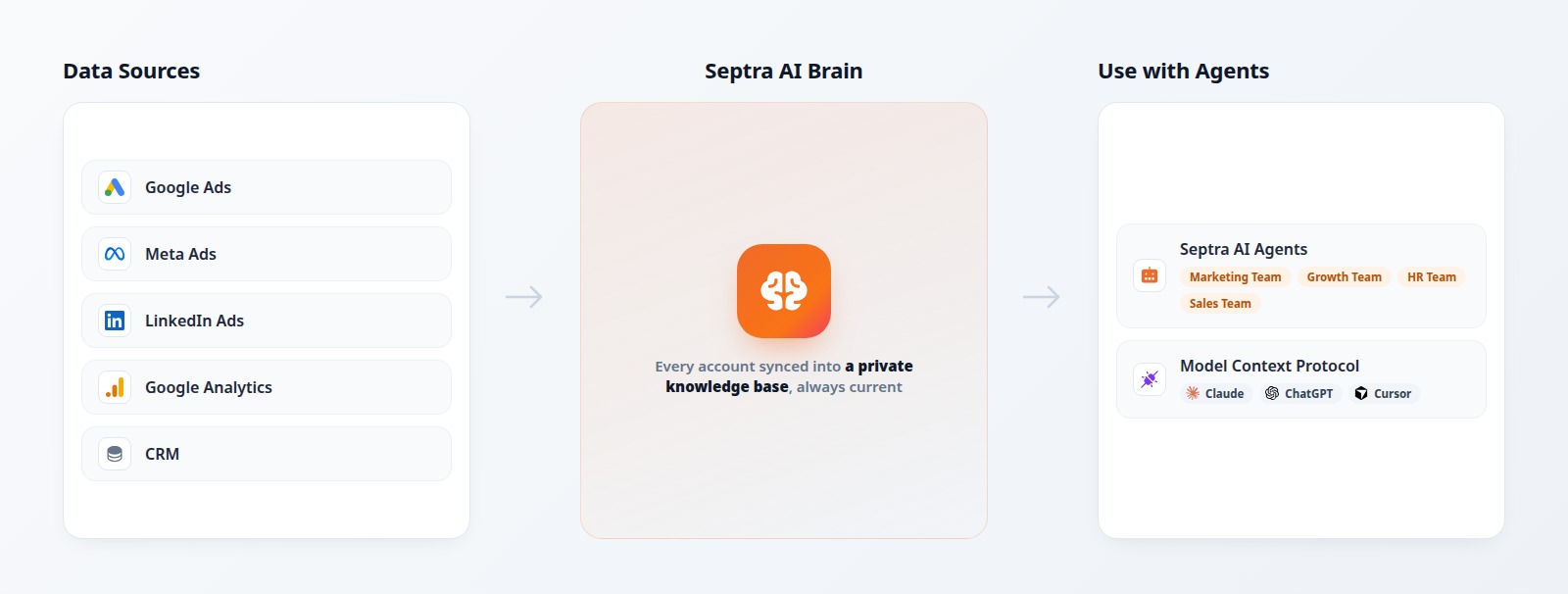
---
1. Multi-Tenant Data Isolation
Septra is engineered as a secure, multi-tenant software-as-a-service application. While tenants share server infrastructure, their data remains strictly isolated.
- Identity Boundaries: All authentication and access management are handled by secure, enterprise-grade identity systems. When a user authenticates, their access token includes a cryptographically verified workspace identifier.
- API Perimeter Control: Every request passing through our API Gateway is validated by an identity filtration service. This filter validates the user token and workspace claims, ensuring no request can interact with data outside its own workspace boundary.
- Database Partitioning: All records stored in our databases utilize the unique workspace identifier as the primary partition key. This guarantees logical database isolation at the query engine level.
- Storage Segregation: Document files uploaded to the Knowledge Base are stored in isolated storage volumes partitioned by your workspace ID. File operations are restricted via security policies scoped strictly to the calling workspace.
---
2. Zero AI Model Training
A primary concern when integrating generative AI is the leak of proprietary data into public model weights.
Tenet: Your private business data is NEVER used to train public language models.
- Private Execution Runtime: Septra leverages private, isolated execution environments for foundation model queries. Under our service guidelines, all model API calls are stateless and ephemeral; data is processed in real-time and is never cached or used by model providers to train their public algorithms.
- Retrieval Grounding: Custom agents do not "learn" by modifying base model weights. Instead, they read relevant document snippets at query time (via RAG) and use them as instant reference prompts. Once the session ends, the context is cleared.
---
3. Data Encryption Standards
- Encryption in Transit: All communications between user browsers, API gateways, external integrations, and cloud databases are encrypted using TLS 1.3 protocols.
- Encryption at Rest: Databases, vector indexes, and workspace configuration databases are encrypted at rest using a secure, centralized key management vault.
- Credential Safety: All API keys, tokens, and credentials linked for third-party integrations (HubSpot, Google Ads, etc.) are encrypted at rest inside a specialized database partition. These tokens are decrypted only in memory during target task execution.
---
4. Human-in-the-Loop Safeguards
AI agents operate as strategic advisors and creators. The platform implements human approval steps for all outbound actions:
- No Direct Posting: Agents cannot publish to connected social media channels without human approval.
- Audit Logs: Every agent decision, KB search execution, and API request is logged. Workspace administrators can review the exact citations, source texts, and prompts used by the AI at any time.